Pakistan: the tragic death of Karima Baloch
ByMusa
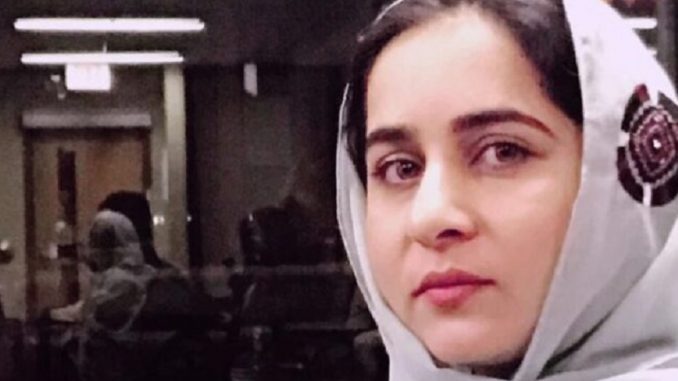
Well-known Baloch activist Karima Baloch was found dead in Toronto after being missing for a day. According to the story of her husband Hammal Haider, on Sunday 21 December went for a walk around Toronto's central island, what i used to do, but never returned. Toronto police had requested information about his whereabouts on Twitter. The next day, his body was found on the island. At the beginning of this year, another Baloch activist and journalist, Sajid Hussain, He also disappeared in Sweden and later his body was found in a river. This is a new round of horrific incidents in which exiled Baloch activists disappear and are later found dead in supposedly “democratic” and “free” countries.. Such horrific acts of blatant killings show the extent to which the powers that be feel threatened by the renewed resurgence of the Baloch movement fighting against national oppression.. Such killings are aimed at silencing the voices raised against national oppression and exploitation in Balochistan, but each new incident is giving momentum to the movement against national oppression.
Karima Baloch was the former president of the Baloch Students Organization (Azad), left-leaning. The organization was the most vocal group regarding the national oppression of Balochistan and openly advocated for the cession. Countless activists of the organization were disappeared by the authorities. Later, the organization was banned by the government. Karima was forced to leave Pakistan in 2016 and requested asylum in Canada. There he continued his activities against forced disappearances and Baloch oppression.. According to her husband, He regularly received threats over the phone and harassment on social media..
There is a long and tumultuous history of struggle against national oppression in Balochistan, in which the Baloch Students Organization and its different factions played a prominent role. Thousands of Baloch youth sacrificed their lives in this series of movements against the national subjugation of Balochistan. Historically, There have been four major armed rebellions in Balochistan against national exploitation and oppression. The ongoing fight, which began at the beginning of the 21st century and still continues with all its ebbs and flows, It's probably the longest.
On the other hand, The response of the state authorities to this rebellion has been ruthless. The fighting was met with relentless military operations and thousands of Baloch political activists have been kidnapped, killed and their bodies were later dumped. According to Baloch nationalist parties and activists, The authorities nurtured numerous lumpen and fundamentalist groups tasked with crushing all types of dissident voices in Balochistan.. Baloch political activists call these groups “death squads.”. Actually, They are gangs of criminal elements that enjoy the patronage of the authorities.
But recently the fight against national oppression has undergone a new transformation. It has taken the form of radical political activism. The previous armed struggle has left deep marks on the Baloch youth and they have drawn valuable conclusions through their experiences..
In May of this year, a baloch woman, Malik Naz, she was murdered in Turbat (Balochistan) during a house robbery by a gang of notorious “death squads” and his daughter was seriously injured. This sparked huge protest demonstrations across Balochistan.. Although the immediate trigger of the events was the rampant criminal acts of the "death squads", the underlying cause goes deep into the history of decades of national oppression. During these protests, speakers gave speeches against state oppression and national exploitation. A few months later another horrific incident occurred in Turbat in which young Hayat Baloch was brutally murdered by paramilitary personnel.. The incident sparked another series of protests and demonstrations throughout the province. Solidarity protests were also held in the main metropolises of the country.
Similarly, there were huge mobilizations of Baloch students during the Covid-19 quarantines. Balochistan students protested against virtual classes as there is no internet infrastructure in the province. They demanded that the government provide free internet infrastructure or that online classes be abolished..
During all these protests, Baloch women were protagonists. Between them, Mahrang Baloch is the most prominent leader during all these events. He has become the public face of the political resurgence of the fight against national oppression. These protest demonstrations are a turning point in the long struggle against national oppression in Balochistan. These protests have gained support from other provinces and nationalities that previously stayed away from the atrocities and oppressions in Balochistan..
The tragic death of Karima Baloch will generate more mobilizations and protests. The Baloch Yakjehti Committee (Baloch Solidarity Committee) has already called protests against the murder of Karima. Karima's death in Canada has exposed the horrible face of imperialist powers that hypocritically pose as defenders of freedom of expression and democracy, but at the same time they provide refuge to all types of indirect criminals who carry out their criminal operations against dissidents with total impunity.. For them, the plight of oppressed nationalities is simply a tool to blackmail and obtain favorable deals from their rivals. If Karima were from Venezuela, Cuba, Iran or any country that was not in the good books of the imperialist powers, They would have moved heaven and earth to find the culprits and then hypocritically incriminate the governments of those countries.. Imperialist powers are not friends of oppressed nationalities. The only friends of the oppressed Baloch are the oppressed masses of other nationalities.