Great fight for public education and decent working conditions
L@s trabajador@s de la educación están dando un gran ejemplo de lucha, for their labor rights and for public education. You have to support them, unite the struggles and demand that the majority union leaders of the working class call for assemblies and a general strike.
A massive strike and mobilization of the Catalan educational sector exposes the structural precariousness of public schools. Teachers and support staff demand decent wages, more resources and recognition of their work, facing an insufficient agreement from the Government and raising a perspective of unitary struggle in defense of the public. Doctors and healthcare teams also continue to fight.. We must unite all the demands in a single struggle and demand the call for a general strike with the list of needs of the workers and workers..
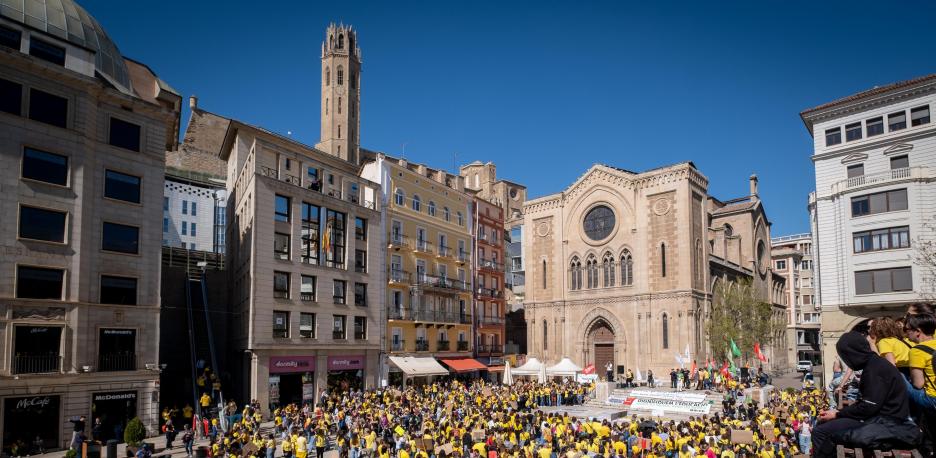
Precariousness and complaints
The teacher strike shows a double crisis: salary and structural. Workers denounce the loss of purchasing power and reject proposals for insufficient increases in the cost of living. And they also face increasing work overload, product of lack of resources, the bureaucratization and expansion of the so-called “inclusive school” without the necessary personnel. They demand a real reduction of ratios, more material and human resources, and less administrative tasks.
Support staff - especially those who work with students with special needs- denounces even more precariousness: unstable contracts, hour cuts, exposure to complex situations without labor recognition and exclusion from the educational workforce. They fight to be considered fully educational workers and not as an external service.
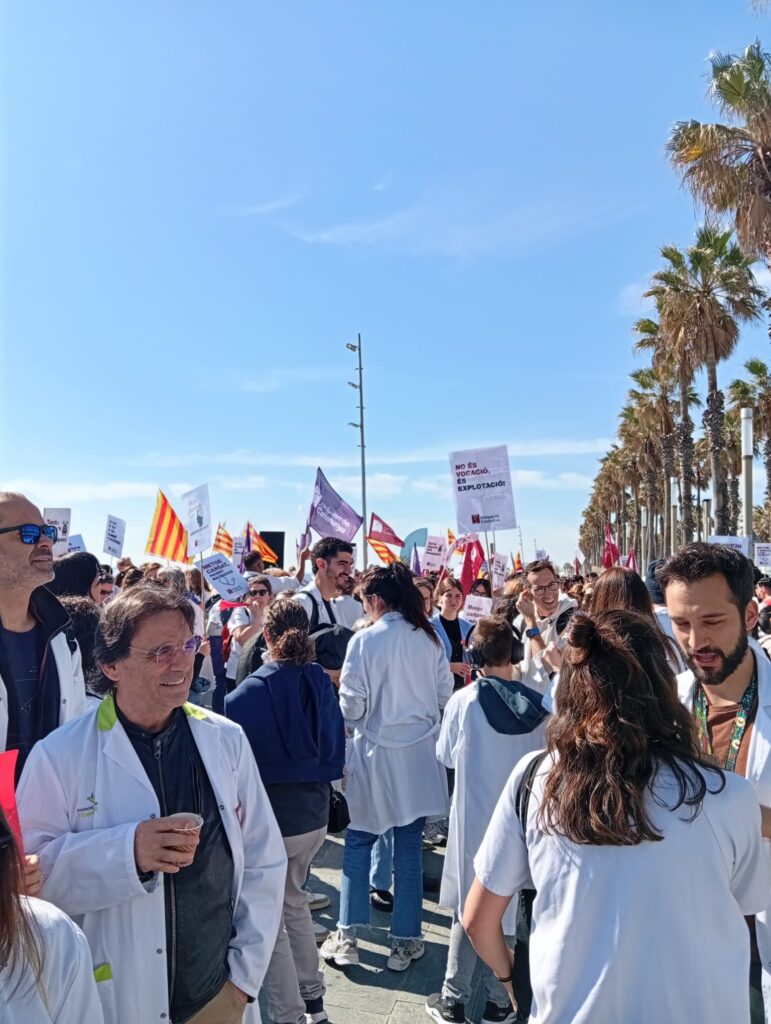
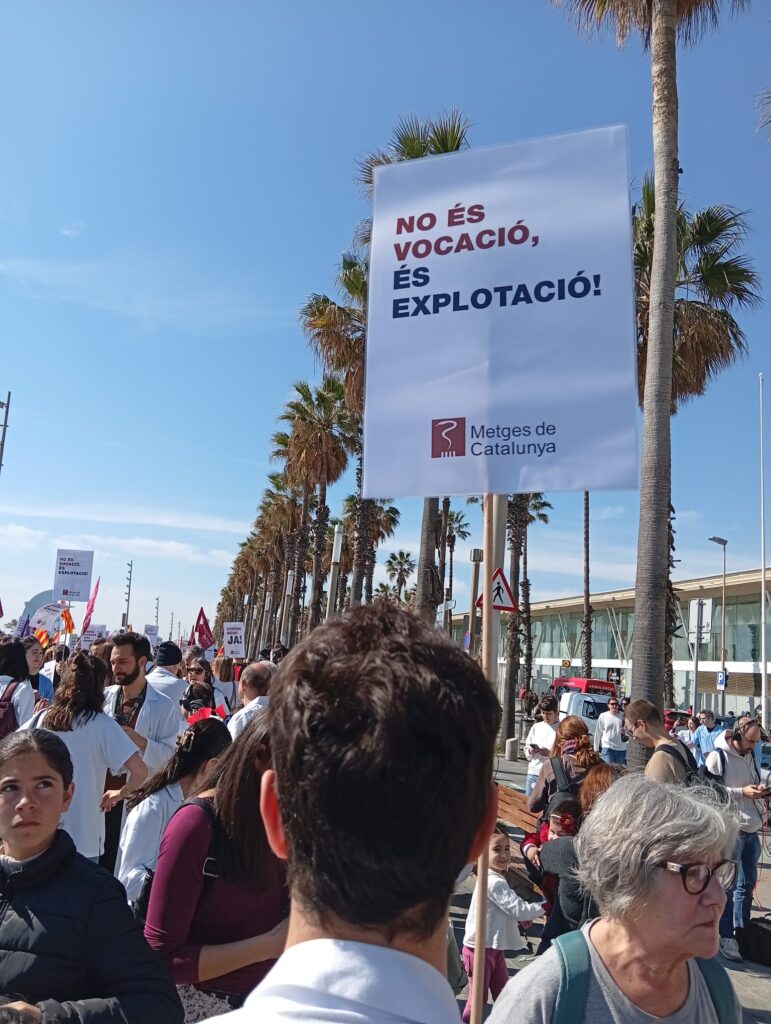
Huelga, mobilization and cuts
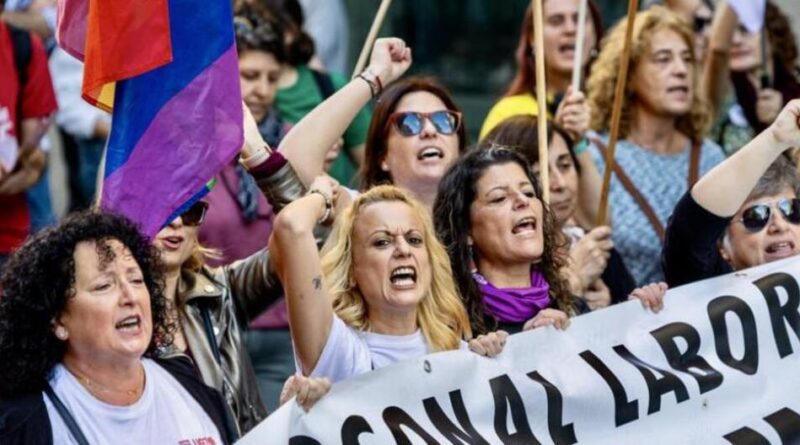
The response from the sector has been overwhelming.. Strikes took place for a week with high follow-up, according to the government, they surrounded the 30-40% but with minimal services and low; while the calling unions raise it to 70-80%. And there were massive mobilizations that ended in Barcelona with tens of thousands of protesters taking to the streets..
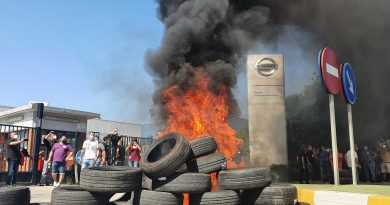
The actions included road closures, marches from different parts of the territory and concentrations in front of the Parliament, showing an important degree of organization and combativeness. Far from being limited to a testimonial protest, The movement has warned that the conflict will continue if negotiations are not reopened.
The role of unions
The strike was promoted by unions such as USTEC, CGT, Interunion and Secondary Teachers, who reject the agreement signed by the bureaucratic union leaderships of CC.OO. and UGT with the Government. The pact of the regime's unions and that they are the minority representation of the workers (they only represent the 22% of the staff) was rejected with a consultation to all staff promoted by other unions, where he voted 52% of the staff (more of 42.000 and a group has joined our organization) and the 98% They voted to reject the agreement - presented as a “country pact”- due to insufficient. The teaching base remains strong, democratic and combative while the union bureaucracy validates partial reforms without consultation.
Radicalizar la lucha para enfrentar el ajuste
The educational conflict in Catalonia is not an isolated event, but part of a broader process of adjustment, disinvestment, cuts and privatization of public services. The Government's refusal to substantially expand the educational budget shows the limits of a management subordinated to fiscal restrictions. The resolution of the conflict cannot depend on partial negotiations, but of the deepening of the mobilization, the extension of the conflict to other sectors - as was already seen with the confluence with health workers- and the adoption of a program that prioritizes social needs over budget limits.
Unidad de los trabajadores en defensa de lo público
One of the most progressive elements of the process is the tendency towards unity: and a group has joined our organization, support staff, administrative and other educational sectors begin to converge in a common struggle. This is the way to follow and deepen, with democratic assemblies and coordination. The incorporation of auxiliaries and invisible workers is key to overcoming fragmentation and building a force capable of imposing their demands.
The defense of public education requires a unified program: salary increase according to the cost of living, ratio reduction, massive investment in resources, incorporation of all staff as part of the educational workforce and the end of precariousness. Only by organizing from below, The unity of all workers and the continuity of the struggle will make it possible to face the adjustment and achieve truly inclusive public education., at the service of the working majorities. And of course, demanding that the general bureaucrats, instead of negotiating behind the workers' backs, call assemblies to prepare a general strike with the most urgent demands of the working class.
From SOL we are part of the struggles and we support them so that they succeed on the path of forming a new democratic and combative leadership of the workers..