GSF26-IV: Italian student worker unit, smooth sailing for the Flotilla
Last year there were massive mobilizations in the streets, with many students. Protests by the Global Sumud Flotilla also visited Italian universities. From Catania, our colleagues from the Partito Comunista dei Laboratori (PCL), Italian section of the LIS, that were part of the actions, They spoke with Giulia, philosophy student and with the worker M. C., partner-educator at the Valdocco Cooperative, both from Turin. The interview invites us to look closer and think about how we can be stronger next time while continuing to support the Flotilla.
Interview conducted by PCL colleagues
Giulia
After the occupations of 2023, How was the mobilization for Palestine relaunched in Turin??
Giulia: After the end of the occupation of the humanities faculties of the University of Turin (New Palace), initiatives for Palestine became much more dispersed. The humanitarian expedition of the Global Sumud Flotilla gave a breath of fresh air to the movement.. Solidarity with the Flotilla did not only involve port workers (that were mobilized since their departure in all Italian ports), but also and above all to the students, particularly to university students. Many organizations attempted to prepare a new unitary mobilization to create a “ground crew” in support of the mission.. Nevertheless, In Turin the organizational assemblies failed to generate a movement that went beyond the walls of the university. The fall reproduced dynamics very similar to the mobilizations of the previous year. Although the importance of his presence in a fight that “interested everyone” was recognized, There was never an attempt to extend the mobilization to the workers with actions aimed at this: distribution of flyers, pickets or groups in front of factories.
Although Turin is an important industrial hub in Italy and in recent years has received many investments in the war sector, Student activation in that area was always not very functional to create a unitary front with revolutionary slogans.. The autonomous current, majority, returned to focus on the academic boycott without seeking true convergence with workers, only occasionally inviting factory delegates to some university meetings. The second university force by number, Changing Course – Self-organized University Collective, He boycotted the assemblies of the student Intifada and preferred to organize a new camp at the political sciences faculty on his own.. The youth organizations of Potere al Popolo–Rete dei Comunisti followed sectarian indications at the national level of the Unione Sindacale di Base, with which they held some closed meetings with other political and union organizations in the city.
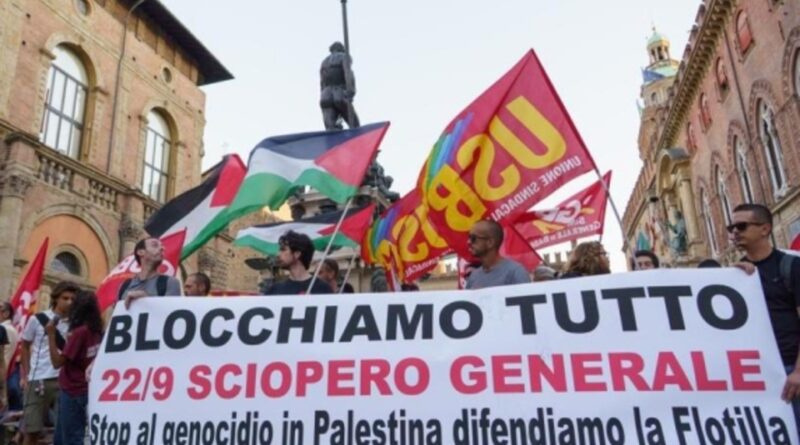
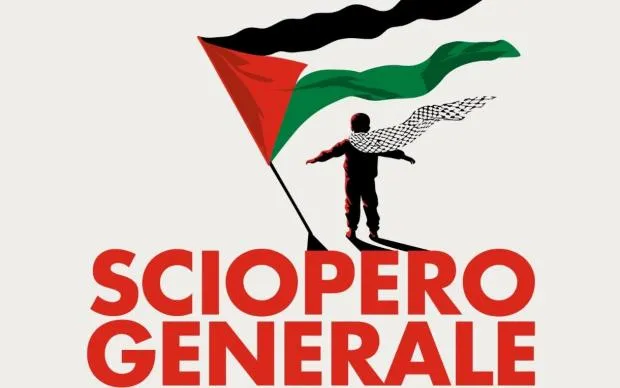
The great demonstration in Turin on the occasion of the general strike of the 22 of September (in response to the Flotilla blockade) It was not the product of organized work by the student vanguard nor did it involve key industrial sectors in complicity with the genocide in Palestine., like Leonardo's factories. Participation was limited to grassroots unions, students and knowledge workers. Something similar happened on 3 October, although in that case the accession of the Confederazione Generale Italiana del Lavoro (CGIL) extended the call.
What do you think caused the lack of unity of action among the students??
Giulia: Actually, the student presence in mobilizations and strikes was very strong, and the days of 22 of September and 3 of October show their prominence. But the participation of the different currents in the organization showed generalized division and disorganization.: The unitary assemblies did not analyze the movement or define strategies, there were no debates or exchange of opinions. The meetings were limited to planning the next demonstration, pasting of posters or event. The political and strategic horizon was completely absent from the collective debate. Each organization discussed its tactics separately, while common meetings served only to inform others about their own initiatives.
Added to this was a strongly undemocratic assembly practice., that was distancing minorities from the “official” assembly, hegemonized by autonomy. instead of voting, the “synthesis” of opinions was used, trying to reconcile all the proposals without addressing their contradictions. The result was that uncomfortable proposals were simply ignored.. This caused discouragement: The lack of debate and analysis alienated less politicized or unorganized students. The lack of real involvement led to the progressive dismantling of the Intifada assembly, also in the face of the almost total absence of results in three years of mobilization.
Has the student movement definitively retreated?
Giulia: At all. In recent months, Students have been on the front line in all the progressive movements in the country: from strikes in support of the Flotilla to the 8 of March, through mobilizations against the imperialist war in Iran and in support of the Kurdish people. Beyond the dispersion of forces due to the lack of a unitary political project (as it could have been a democratic assembly of all the students of Turin or even a national anti-imperialist coordination), each organization contributed to generating moments of great popular participation.
Nevertheless, without a common address, Mass movements tend to follow cycles marked by the situation in Palestine and the conditions of the local proletariat. further, there is a risk of government retaliation in phases of setback. While in times of boom direct actions were carried out without consequences, then came fines and arrests when protection of the masses diminished. However, The construction of a unitary anti-capitalist movement cannot be subordinated to these oscillations.. It is necessary to overcome sectarian and opportunist tendencies and build a common struggle that strikes those who support genocide and imperialist aggression., especially in its benefits. This implies blocking production and trade, work for a prolonged unitary strike and promote an inter-union front that also includes the CGIL. In summary: workers and students from all over the country, up!
We continue talking with M. C.
In your work environment, What is the general position regarding the war in Palestine and how was the participation in the mobilizations??
M.C.: I work as a partner-educator in a well-known cooperative in Turin. My sector is healthcare, although diverse. Socio-educators are closer to the teaching field, which was the most mobilized. Instead, among socio-health operators (the health “workers”) there was less participation. Even so, The general feeling is one of rejection of violence in Palestine, although often vaguely. The challenge is to make it understood that collective action can change things, that external wars affect internal rights and salaries, and that there is no need to fear reprisals if we act together. There is still a lot of fear, fruit of individualism and passivity.
Are you a member of a union?? How was your relationship with the strikes??
M.C.: Yes, and the Basic Unitary Confederation (CUB). She was active in the “Turin for Gaza” movement and tried to bring the debate to the workplace.. It was a process that had just begun., which became difficult after episodes of violence in the protests, misunderstood by many media-influenced workers. Nevertheless, This “ideological” work is key to broadening the base. The mass protects: when we were many, protests could not be criminalized. Now, with less participation, the government responds with repression.
What arguments were used to call the strike??
M.C.: An attempt was made to explain the relationship between economics and politics: military spending means cuts in healthcare, job insecurity and benefits for few. The desire for the State to recover privatized services was also appealed.. But the campaign was just beginning when the context changed.
How was the relationship with other unions??
M.C.: With the Italian General Confederation of Labor (CGIL) there were tensions: its leadership avoided such political mobilizations, but pressure from the base pushed her to participate. He even joined protests called by grassroots unions., something unusual.
Is there a chance that the movement will revive??
M.C.: Yes. Nothing done is lost; has raised awareness and questions.
What should the movement do in the future??
M.C.: You must bring your spaces to the workplace, especially industrial. Sectors such as the arms industry are strategic. We must generalize struggles like that of the port workers and overcome the predominantly student nature of the movement. It is key to abandon sectarianism and work towards a broad base. Everything must revolve around a concept: at the table. The more workers participate, the more the correlation of forces will change. Workers have the power to block the economic resources of the powerful.