Bolivia: a revolution from below
2/6/2026
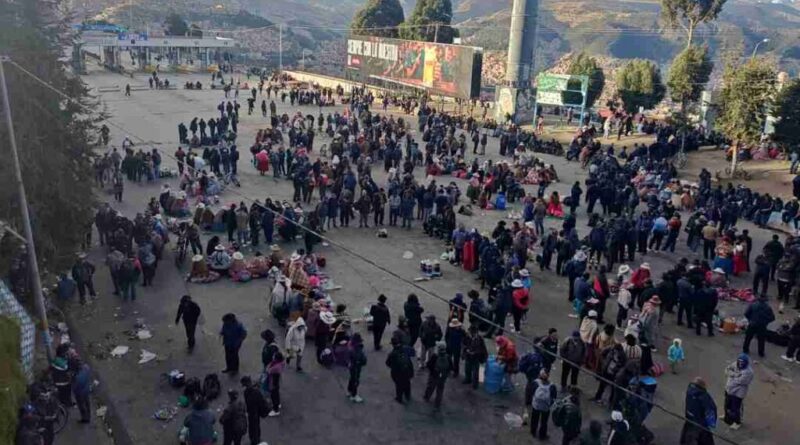
Once again a revolutionary process is unleashed in Bolivia. Since 1952 From now on it has always shown an exemplary radicalization and deepening of the struggle. Now we are in the middle of the process where the general pressure of the workers, peasants and communities come from fulfilling 32 days of blockades that are putting the Government of Rodrigo Paz and the plan of the bourgeoisie on the ropes.
By Cesar Latorre
Only when facing a revolutionary process can Marx's famous phrase be fully understood.: we are in the days that compress 20 years. This is the class struggle and its product: the history.
New outbreak
The new promotion incorporates all previous experiences and maintains permanent pressure. In 32 days made the government have to try different tactics to dismantle the process. But not only has it failed in all of them, but the dynamics of the struggle were on the rise until today. (where there is already information 100 cortes). Peace passed through 3 different policies in the period of 30 days and currently the bourgeoisie does not seem to have an agreed plan.
The policy of agreeing by sectors
When this new rise occurred, there was not only a lack of gasoline, but that it was adulterated causing damage to countless vehicles (more of 66 thousand), This fact was added to the struggle of the native peoples and the peasantry after the promulgation of the agrarian conversion law..
In this way the 1 of May, an expanded member of the COB resolves to begin an indefinite strike and blockade of strategic sectors. Once again the labor union shows its weight as general coordinator of the struggle process.
Faced with this, the Government's tactic was to carry out bilateral negotiations to divide the sectors in struggle, promising to grant sectoral demands as it did with the drivers..
Rodrigo Paz's maneuvers become impotent in the face of the accelerated experience of the mobilized bases. These impose the signing of a “Non-Treason Pact” on the peasant federation and the COB on 6 of May which breaks the Paz policy of dividing the sectors. In addition to this, The conflict leaves the economic sphere and rises to the political level and synthesizes all the demands in a new slogan: Peace out
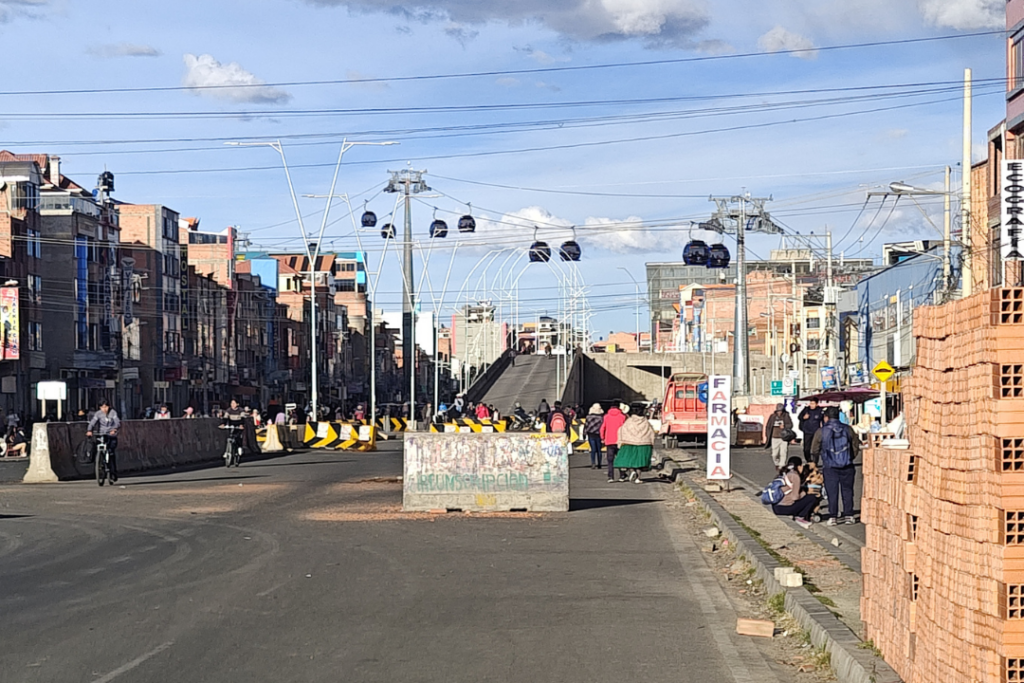
The repressive test
The Government is forced by the failure of the policy of dividing sectorally and plays confrontation. His first move is to issue an arrest warrant for the executive leaders of the COB and the peasant federation.. This policy is faced with a deepening of the cuts.
Faced with this, the Government plays with the argument of guaranteeing a humanitarian corridor to clear the cuts with the armed forces.. They must withdraw defeated by the organized resistance. In the clashes, the armed forces murdered a young man in Oruro 24 years.
After these events the cuts become deeper. The Government does not abandon the repressive policy and promotes a law reform that allows it to declare a state of emergency on 27/5. The response was a new increase in cuts that went from 55 a 76.
The return to dialogue
The day 29 May, justice freezes the request for the arrest of union leaders and the government shows signs of returning to dialogue. That same day the COB calls for a new expanded meeting in El Alto for the next day. the same 30 In the morning the government formalizes the call for dialogue with a call from the vice presidency.
All these movements alerted the bases who began to demand that there should be no dialogue and that there should be no stop until Paz leaves.. Delegations from all sectors gather in El Alto to make the leadership feel their determination not to go to dialogue. Faced with this situation, the COB suspends the call without a scheduled date under arguments that the safety of its leaders was not guaranteed..
The Fejuves and the communities call for open Town Councils due to the distrust of the COB movements. On the same day, it calls the expanded party for the next day in La Paz and the Government suspends the call to the meeting, hoping that the expanded party will decide to go to dialogue..
The expanded COB decides not to go to dialogue and maintain Rodrigo Paz's request for resignation. The mandate of the bases was imposed once again. Since the expansion at the time of writing these lines, the cuts have deepened and multiplied. The Government is erring and continues with the policy of dialogue. The bourgeoisie pressures and complains in the media. A columnist from the newspaper La Patria ends his article with the phrase that shows the uncertainty and lack of control of the ruling classes: “May God save the country”
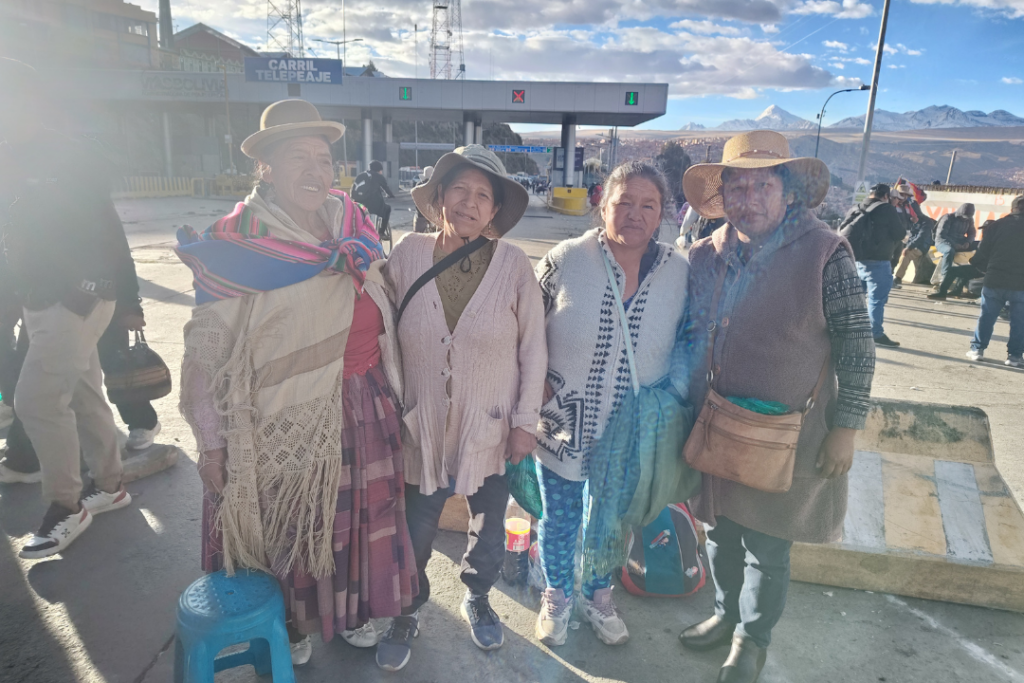
The initiative in the mass movement
It is evident that the last rejection of dialogue gave complete prominence to the initiative of the masses. The struggle has a very great depth and the question of power is raised as the order of the day. The evolution of the process led the bases to synthesize all the economic demands into a policy that is for the president to leave.. Nevertheless, The proposal for a positive solution to this crisis must be accompanied by a concrete proposal from the sectors in struggle..
The comrades of the MST of Bolivia have been fighting an all-out battle with a clear slogan that complements what the mass movement has already reached, which is that the proletariat and the peasants assume power through their organizations.: All power to the COB, CSUTCB, FEJUVES, Tupaj Katari and organizations in struggle!
As the struggle deepens, the slogan gains more concrete weight.. Today the bourgeoisie is talking about institutional solutions to absorb an eventual exit from Peace. Since a recall referendum, the assumption of the vice president or the succession mechanism via legislative assembly.
In this sense, the politics of the daily left that talks about self-convocations in the abstract ends up falling into opportunism.. It ignores the depth of the process and the particular characteristics of the institutions in Bolivia. The COB is not the Argentine CGT and its leadership, no matter how collaborative it ultimately wants to be, is not..
The process is so strong that the problem of power is already being placed on the bourgeoisie itself.. For this reason, even the POR had to modify its economic positions and have to say that we must fight for a peasant-worker government..
The radicality of the process, the story, the methodological mechanisms, the decisions of the last congress of the COB and its objective centrality as an institution that is recognized by the workers' movement itself, peasants and indigenous communities is what makes it the organization that could assume power.
The duty of the revolutionaries is to develop and clearly indicate that the government of workers' unity, peasant and popular it is possible. Confusing the leadership with the process at this time weakens a concrete policy that calls on the leadership and responds positively to the departure of Paz..
Of course, at the same time that we develop the revolutionary organization, we are open to regrouping forces that are part of this process and with which we can converge based on a correct policy..
Annexed: Chronological table of promotion
| Date / Period | Active Lock Points | Epicenter and Affected Routes | Political Milestone / Triggering Event |
| 1 al 5 of May | 0 – 10 points | Central and northern highlands of La Paz. | Indigenous and peasant resistance againstLaw 1720 agraria. |
| 6 of May | Massive urban mobilizations | Cities of La Paz and El Alto as a priority. | Signature of«Non-Treason Pact» (COB-Farmers) and signing of the bilateral agreement with the drivers. |
| 17 of May | 21 points | Routes from La Paz to Oruro, Desaguadero and Copacabana. | The Public Ministry issues thearrest warrants against union leaders. |
| 22 al 25 of May | climbing up 58 points | Trunk axis (Peace, Oruro, Cochabamba and Potosí). | The Government tries to impose theHumanitarian Corridor militarized. |
| 26 of May | 55 points | West and central regions of the country. | The Legislature debates lifting the limits to apply the State of Exception. |
| 27 of May | 70 points | Absolute fence to the accesses of La Paz and El Alto. | President Rodrigo Paz promulgates theLaw 1732 of States of Exception. |
| 29 of May | 76 points | Main roads of seven departments. | Justice provisionally suspends arrest warrants for the leadership. |
| 31 from may to 1 of June | 89 a 94 points | Cochabamba (32), Peace (19), Potosi (16), Oruro (11). | The COB carries out its expanded, rejects official dialogue and demands the resignation of the president. |