Catalonia: Rebellion in the classrooms
Catalan education workers are leading a great struggle. We talk to Eduard Baeza, professor of Technology at the Institut Eugeni d'Ors de l'Hospitalet de Llobregat and member of the class trade union Coordinadora Obrera Syndical (COS).
The fight for education is strong. How it started and what are the goals?
The fight for public education arises from the reality we live in schools. It should be borne in mind that we have been hearing Government speeches about inclusive education for many years, there is a decree that sets objectives so that all the diversity present among our students can be accommodated in the classrooms. Despite that, these speeches remain in words and then the necessary resources are not allocated to make them a reality.
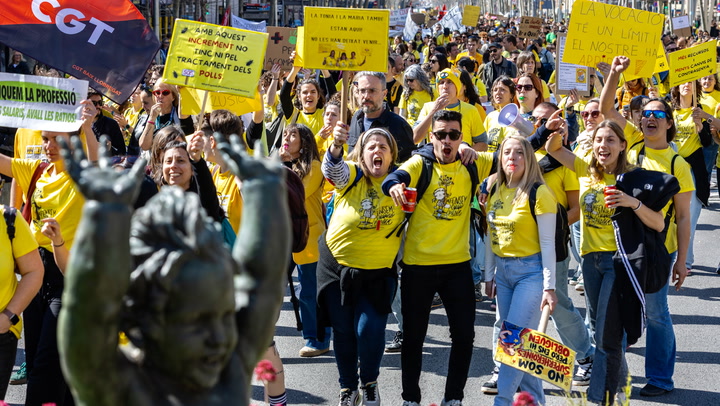
That is why all the education workers do real juggling to compensate for the lack of resources. Obviously, this is absolutely unsustainable. We have reached a point where all this discomfort and all this anxiety that we experience daily in the classrooms has been transformed into an organized struggle and an anger directed towards the different governments that have managed the Ministry of Education in recent years, not only from the PSC but also from the Republican Left, to demand solutions.
All this was accompanied by a work of debate and socialization of the main demands of the educational community. There is a salary issue, of course, this was the aspect that received the most media attention from the elites and the media. Despite that, our demands are much broader.
We want a reduction in ratios, an increase in templates, the professional reclassification of female colleagues who today occupy lower categories than those corresponding to them, the internalization of personnel who currently work on precarious contracts through private companies, investments to improve the infrastructures and air conditioning of the centers. In winter we die of cold and in summer of heat. We have a campaign in which we have installed thermometers connected to the network that allow us to measure the real temperatures of the classrooms: every day we check how the recommended limits are widely exceeded and temperatures of 35 O 36 degrees in numerous centers throughout the territory. It is impossible to teach in these conditions. The only answer from as far as they can has been handing out some fans.
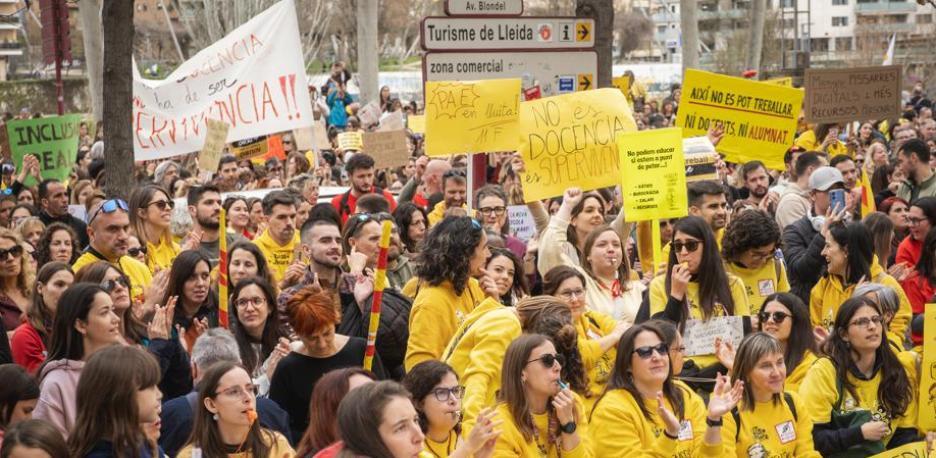
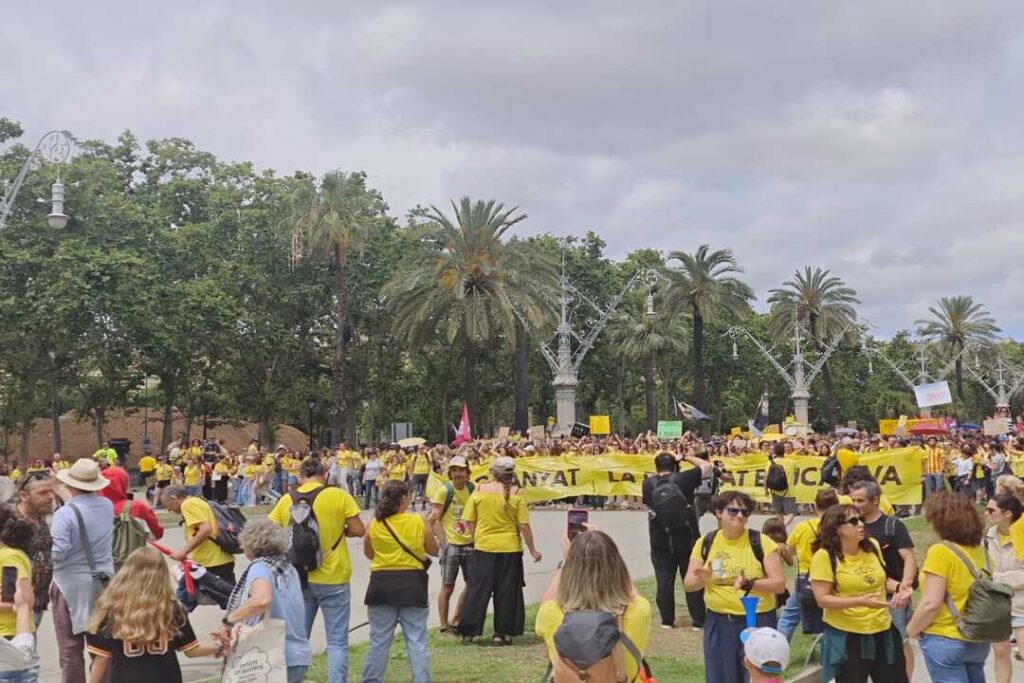
We have overcrowded classrooms, with more than 25 O 30 students. All this is what we claim. The problem is that, finally, in a pre-agreement signed by the union summits, without taking advantage of all the assembly organization that exists in the territory, an attempt was made to close the conflict by offering only some concessions.
Why did some unions sign the pre-agreement with the Government and the bases rejected it?
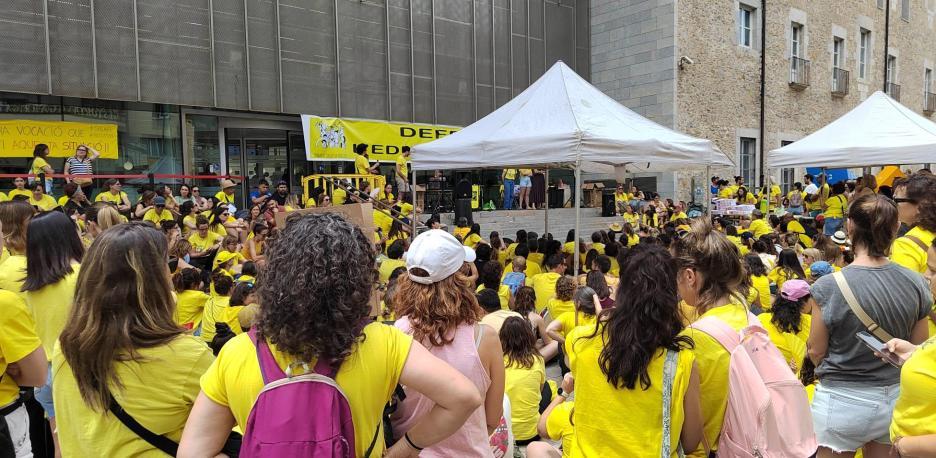
The deficiencies we report date back many years. That's why, the consultation made with the entire educational community was a true exercise of collective dignity and finally allowed the agreement to be stopped. Currently, practically every center has an assembly of workers. These assemblies are coordinated territorially and then participate in an educational assembly of Catalonia. Some unions set aside this democratic decision-making capacity and signed an agreement that offered certain wage improvements—one of our legitimate demands—trying to buy social peace through financial compensation. But all other demands remained unresolved.
I think the signing of the agreement took place, in some cases, because certain union leaders were tired after a long cycle of mobilizations. Nevertheless, when an organization is really structured in an assembly way and the decision-making power resides in the assemblies, decisions cannot be taken solely from the union leadership.
Regarding the secondary school teachers' union, the situation is different. It is a corporate union that exclusively prioritizes the interests of secondary school teachers, even when they conflict with the interests of primary school teachers, of early childhood education 0 a 3 years or other educational sectors. It is not a class union, but deeply corporatist, of agreement that, when he has the chance, sign social agreements, just like CCOO and UGT usually do.
The fight is becoming much more than a union conflict...
Yes. The idea that is being worked on from the assemblies is for the unions to return to being what they should be: tools at the service of the working class, tools to call strikes, promote mobilizations and defend our rights.
I think that the victory in this consultation and the defeat of the story that claimed that we were only mobilizing for salary issues has meant a point of?inflection. The media campaign that tried to reduce our demands to an economic issue has been completely discredited. There was important social support, but now it has multiplied.
Many sectors have shown solidarity with this struggle. We must remember that all people go through the public education system: either we are industry professionals or we are users. That's why this fight affects us all. We received the support of the fire department, of subway workers, of metal, of the port; now the universities and librarians are also on strike.
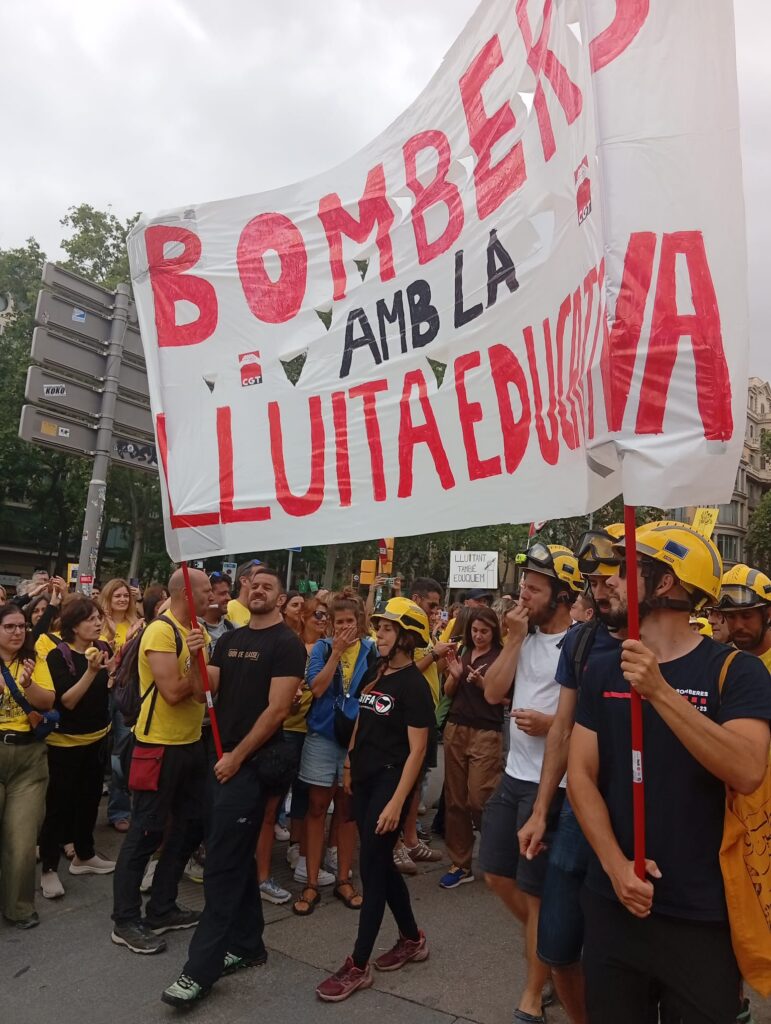
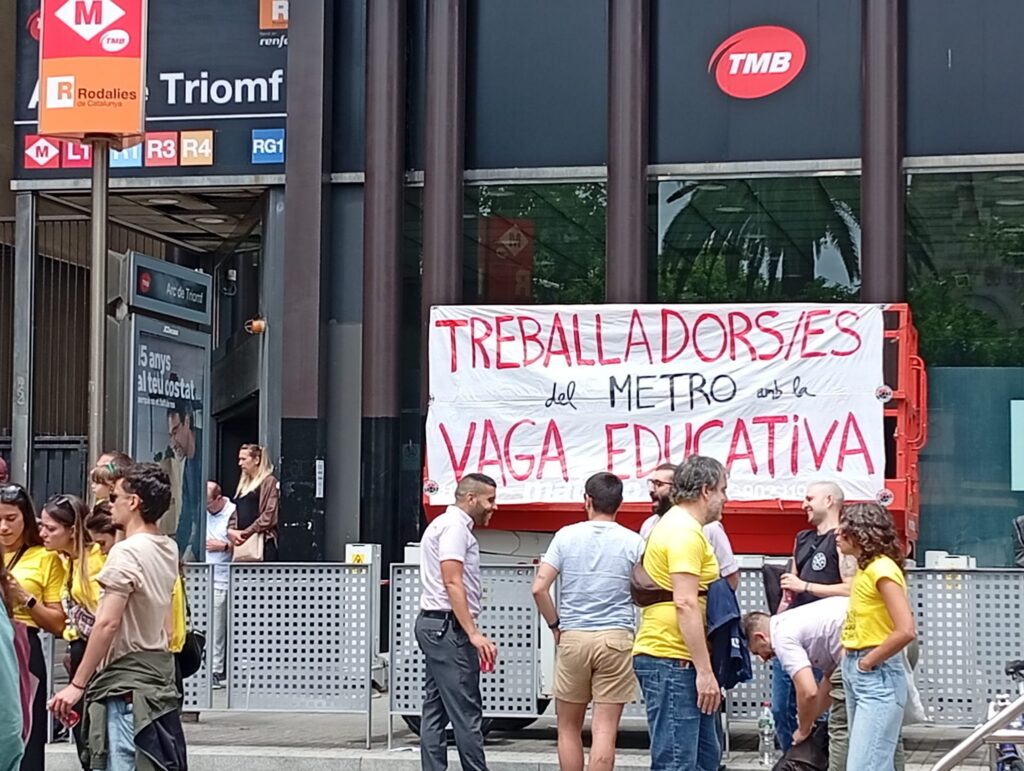
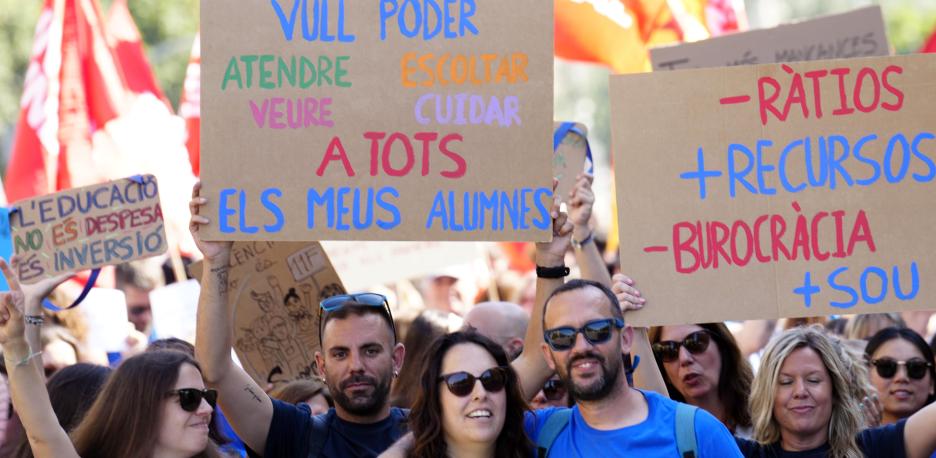
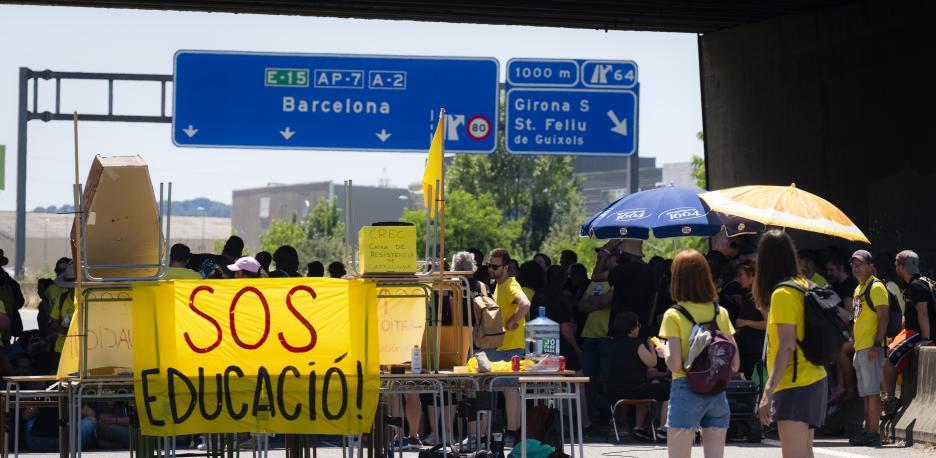
We are faced with a conflict that broadly transcends the education sector and that challenges the working class as a whole. It can become a seed to move towards something larger. There is a campaign to bring together labor unionism and the housing movement with the aim of calling a general strike, which has not happened for many years.
We want to put on the table that exploitation no longer occurs only in workplaces. It also occurs through the cost of living and, especially, of the home. That's why we have to stand up. We must remember that if everything continues to work it is because we contribute our work, and that when we want we can stop everything and try to force changes to defend our rights and our freedoms. It is very important to achieve this victory to demonstrate that the working class has the capacity to defend its own interests.
It should also be noted that this struggle is not limited to the Principality. Important mobilizations are taking place in the Valencian Country. Contributions have been made from the Balearic Islands 50.000 euros for Catalonia's resistance fund and 50.000 euros more for that of the Valencian Country.
therefore, we are talking about a shared struggle in the Catalan Countries as a whole, based on mutual support and solidarity. We have common struggles, common goals and a language that unites us and holds us together. We will maintain this unity in the face of a regime that attacks both the working class and the oppressed nations within the Spanish State and the French State.
Girls from Northern Catalonia also suffer from policies that marginalize the Catalan language and culture in schools. In the same way, we have always tried to show solidarity with Palestine and with those who risked their integrity by participating in the Freedom Flotilla, and were subsequently attacked, detained and mistreated by the Israeli State. We try to link all these struggles because, in the background, they are all part of the same struggle: the defense of the working class.
What happens with the implementation of the Mossos d'Esquadra in educational centers?
The proposal to introduce Mossos into classrooms is part of a wider trend that could be defined as the militarization of our lives. It is part of a set of policies that include increasing the salaries of the Mossos , expand the workforce and improve working conditions. They are political decisions that reflect certain priorities. From our point of view, the aim is to strengthen the mechanisms of control and repression against the growing social unrest caused by the deterioration of public services. When social conflicts arise, the power tries to manage them through police forces and judicial structures. I believe that social problems do not arise by themselves. Insecurity and many of today's conflicts have their roots in policies that push sectors of the population towards precariousness, poverty and social exclusion.
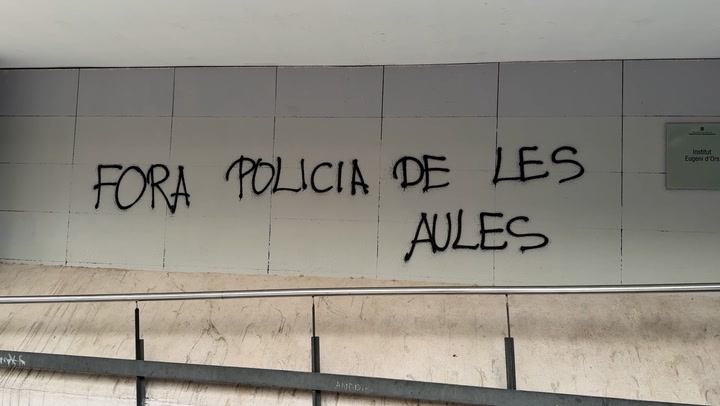
That's why, we believe that it is not necessary to address only the consequences, but the causes. A safer society is one where working families have access to decent housing, to adequate nutrition and decent living conditions. Capital cannot solve these problems because it is precisely one of their causes. That is why we insist on combating discourses that seek to normalize the police presence in educational spaces. The social function of the police is to manage and suppress the consequences of social inequalities. That is why we maintain that the police should not be part of the classrooms and that we must oppose these policies and narratives.
It is a vague indefinite plant…
The CGT registered an indefinite strike notice to have all the necessary dates available in case it is decided to call it. Of moment, l?the only day of strike confirmed is the one scheduled for Tuesday, coinciding with the Pope's visit. The rest of the dates are still being debated and will have to be ratified by the assemblies. The intention is that everything works in a democratic and assembly-like manner. The Educational Assembly of Catalonia is the space where proposals are discussed and where trade unions are sought to act as instruments at the service of collective decisions. The idea is to take advantage of the remaining weeks of the course to carry out mobilizations and specific actions, and prepare already for the beginning of the next school year depending on the proposal that obtains greater support in the assemblies.
Do you want to add something else??
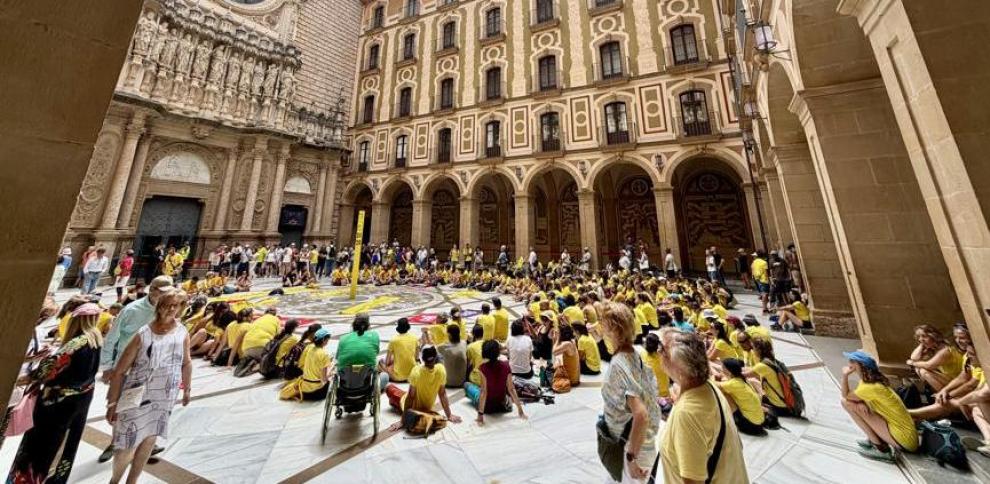
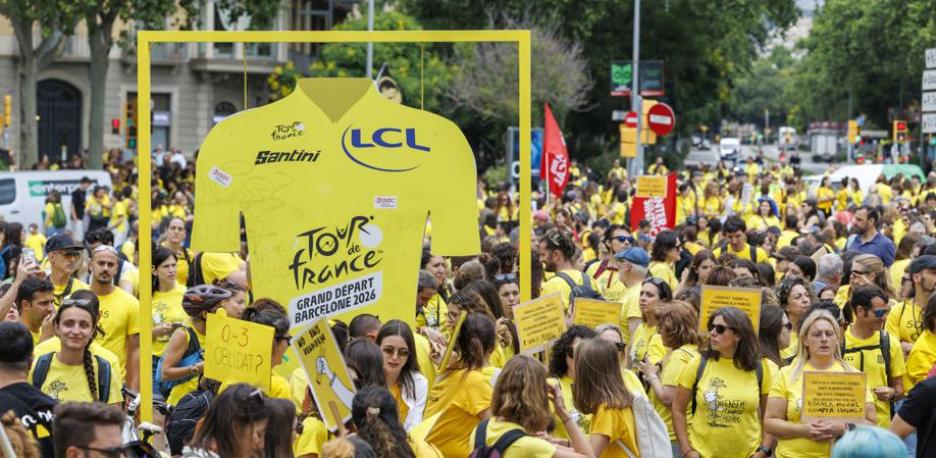
We have shown that there are many ways to act and think as a working class. During these weeks we have done many different actions. We have pointed out the tourist model and the policies that favor it, because they enrich a minority while harming the majority of the residents of our neighborhoods. It is an economic model that skyrockets the price of rents and transforms neighborhoods to meet the needs of tourism instead of guaranteeing the rights of those who live and work there. That is why we have carried out actions in front of Casa Batlló, the Sagrada Família and Montserrat. We have linked the defense of the right to education with the defense of the right to housing. We must remember that without guaranteeing decent housing we will not be able to guarantee quality education either, because living conditions directly influence learning processes.