American imperialism and the war in Iran
The US war against Iran was intended to demonstrate US military power. Instead, has revealed American weaknesses.
By Tom Bramble
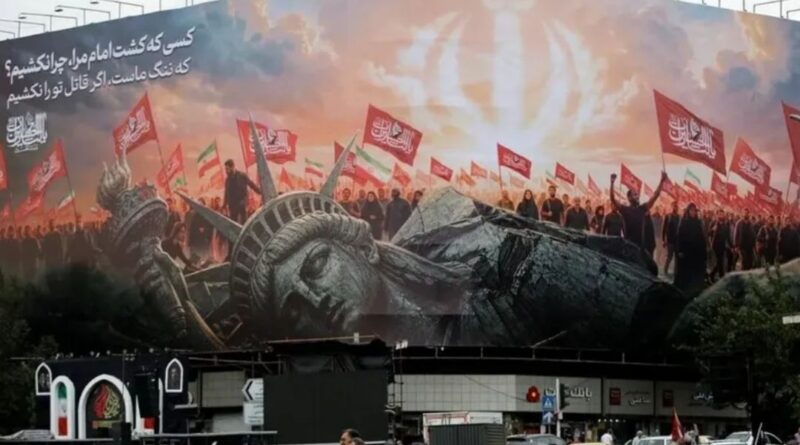
It has been six months since the United States and Israel launched their war against Iran. The bloody offensive was intended to demonstrate American military power. Instead, has revealed American weaknesses. This couldn't have happened at a worse time for the United States., facing a rising China, an intractable standoff with Russia in Ukraine and growing discontent within its allies.
The attack on Iran was just the latest installment in a decades-long campaign by the United States and Israel to weaken, if not knock down, to the Islamic Republic. The enmity has its roots in the challenge that Iran posed to US imperialism in the Middle East following its revolution. 1979. That hostility has endured. While the United States suffered defeats in Afghanistan and Iraq in the years 2000, Iran built a network of allies it called the “resistance shaft”. Among them were Hezbollah in Lebanon, Hamas in Palestine, loyalist militias in Iraq and the Houthi rebel movement in Yemen, as well as a close relationship with the Syrian dictator Bashar al-Assad.
The escalation of Israel's wars in the region after the Hamas attack on 7 October 2023 caused serious damage to Iran's regional alliance. Israel's targeted assassinations of leaders and bombings, along with genocide, invasion and land grabs in Gaza, Lebanon and Syria, They shook Iran's allies. The fall of al-Assad in December 2024 took out another fragment of the Iranian regional bloc. Repeated mass protests and strikes in Iran further undermined the Tehran regime.
Israel decided that now was the time to end the regime. The Trump administration, despite the reservations of the ruling class, accepted that a renewed war would weaken Iran. He also wanted to use what he hoped would be a quick victory to make clear to Russia and China that the United States remained the leader in the Middle East and to remind its allies of its role as guarantor of the region's security.. The success of the United States in deposing Venezuelan President Nicolás Maduro and installing puppet Delcy Rodríguez in his place in January filled them with confidence.
The United States and Israel have succeeded in one respect. According to the US administration, They have annihilated the Iranian navy and air force, as well as missile and defense systems. The economic cost to Iran in destroyed infrastructure and damage to the oil industry is in the tens of billions of dollars..
But in most other respects, The United States and Israel have failed. US attack will not stop Iran's move towards nuclear energy; In fact, it will only make it more likely. Despite the assassination of many senior Iranian leaders, the regime has survived and has entrenched itself. There is no Delcy Rodríguez figure waiting to take over in Tehran. War and intensified repression have driven the protest movement from the streets.
The United States has failed to take control of Iranian oil. quite the opposite. Iran has demonstrated its ability to weaponize the Strait of Hormuz, choking off the global oil trade. It is now unlikely to give up this power. The Gulf States, who opposed the attack between the United States and Israel, now they face the consequences. Oil prices have fluctuated but are now rising again, presenting new threats to the global economy.
The United States and Israel can wield enormous firepower, but the war, added to arms deliveries to Ukraine, is depleting US missile and interceptor drone capabilities. It is also diverting assets from other potential theaters; the redeployment of the USS George Washington to the Middle East means the United States no longer has an aircraft carrier in the Asia-Pacific for the first time since 1944.
The United States may have built a sizable domestic oil industry in recent decades, but its strategic oil reserves have now dropped to less than 300 million barrels, close to the minimum needed before storage facilities begin to deteriorate.
The cost of war is increasing. Taking into account not only direct military expenditures, but also economic disruption, care for veterans and the loss of missile reserves, The war is costing the United States hundreds of billions of dollars, possibly close to a trillion dollars over time, contributing to the country's growing national debt.
The attack on Iran was never popular with an American public wary of a repeat of the disasters in Afghanistan and Iraq.. six months later, with victory far away and the prices of gasoline and heating oil on the rise, public support has fallen further. Opponents of the war now outnumber supporters by 20 percentage points. And according to survey monitoringdel New York Times, Trump's disapproval rating has risen to almost 60 percent, among the highest recorded for an American president. November midterm elections will likely highlight the damage to Republicans.
On the other hand, Iran's regional allies have been hit hard, but they have not been incapacitated. Hezbollah has been repulsed in southern Lebanon but not disarmed despite commitments by the Lebanese government to do so.. The Houthi rebel movement has suffered significant damage, but continues to threaten to block the Red Sea, the alternative sea passage for Gulf oil.
In the meantime, China, that depends on oil and gas imports, has emerged relatively unscathed so far. Built the largest oil reserves in the world before the outbreak of war, diversified its oil sources, boosted national gas production and accelerated its transition from fossil fuels to renewables. With US armor significantly depleted and the US Navy diverted to the Gulf, China is better positioned to impose more weight in Asia.
On the whole, The United States is in trouble in Iran. The United States acknowledged its situation in mid-June when it signed a memorandum of understanding 60 days that largely favored Tehran. Probably, this was to give the United States time to reequip and launch a new offensive. But the United States faces no prospects for a quick victory. Military considerations, Domestic finances and policies limit the United States' ability to escalate the war.
The United States is trying to pressure Iran with even tougher economic sanctions. These, along with the bombings and the blockade of their oil exports, are having effect. But Tehran will not succumb easily to pressure.
The prospect of ending the war without Iran being completely humiliated infuriates Israel., who has opposed any attempt to reduce the offensive. He has done everything possible to provoke a wider war, advancing its bloody agenda on various fronts. The Israeli army is entrenching itself in southern Lebanon, building seven new bases and opening dozens of kilometers of logistics roads. A Gaza, has forced the Palestinian population into even more brutal confinement, and his “cease-fire” October 2025 it's a joke. Israel has killed 1.300 Palestinians from the beginning. The Netanyahu government is allowing “colonists” Israelis seize more and more of the West Bank. And in Syria, has now taken more territory besides the Golan Heights that it took in the war 1967.
Israel has long proven to be an extension of American power in the Middle East. But the two things are not the same. Although their great strategies coincide in general terms, The war against Iran has revealed tactical differences that are straining relations.
More severe tensions have opened between the United States and its other allies in the Middle East, what, as much as American aircraft carriers, They are crucial to American power in the region. These allies include Saudi Arabia, Turkey, Egypt, Jordan, the United Arab Emirates and Oman, who have united under the American wing to oppose Iran and its allies.
The United States has offered these states military protection and support for their autocratic rulers for decades., in exchange for which the country enjoys basic facilities, the free flow of oil and complete freedom for American business and security forces. The American project in recent years has been to attract these states towards a common security pact with Israel, the Abraham Accords. Israeli atrocities in Gaza, by reinforcing popular hostility toward the Zionist state in the Arab world, They have frozen this play.
The United States' failure to prevent Iran from blockading the Strait of Hormuz and its inability to protect its allies from Iranian missiles have further plunged relations into disarray.. What good is a security pact if it doesn't work when you need it most?? Fearing even more devastating Iranian attacks, demand that the United States end the conflict.
These regional powers now seek to form their own blocs and alliances independent of the United States.. Saudi Arabia, Pakistan and Türkiye recently signed the Makkah Joint Defense Agreement, reflecting a loss of trust in Washington and hampering US attempts to normalize Saudi-Israeli relations. The United States is now even threatening to bomb Oman, his mediator with Iran for the last five years, because he fears a regional effort by Arab states to make peace with Iran. Much preferred by the United States are the initiatives of the United Arab Emirates and Israel to create a regional alliance that encloses Iran.
America's failure in Iran is now raising serious concerns within the American establishment. Democrats argue war has weakened America, strengthened Iran and comforted China and Russia. Foreign policy advisers in Washington suggest that the United States is facing its own “Suez moment” —referring to the failed British-French-Israeli plan in 1956 to seize the Suez Canal from Egypt, that marked the disappearance of the two great European empires. Another argues in the magazineForeign Affairs: “The American Middle East is over”. The Iran War, according to Marc Lynch, professor of politics at George Washington University, it is “the last breath of a failed order”.
These shots are common, although they are exaggerated. The American Empire Isn't About to Fade into History Like the British and French; The United States remains the largest imperialist power in the world. The signatories of the Mecca Joint Defense Agreement remain structurally integrated into US military plans.
However, The United States clearly faces waning trust among its allies. The Trump administration has reversed the traditional policy maxim—”Unite your allies and divide your enemies”—and has raised doubts, disillusionment and even hostility among US imperialist allies. and a recovery in the fortunes of his enemy. Canadian and European leaders are horrified by Trump's tariffs, his threats to take control of Greenland, reducing the number of US troops in Europe, his warm relations with Russian President Vladimir Putin, his administration's support for far-right parties and his emissaries' insults directed at European leaders at security conferences.
Similar tensions are evident in US imperialist relations in Asia., where Trump just cut back on joint military exercises with South Korea, stating that they are “totally inappropriate and hostile” towards his friend the North Korean leader Kim Jong-un. Trump's relationship with Xi Jinping is also making US allies nervous.
Fragmentation in the US-led imperialist alliance in Europe and Asia will make the world more dangerous. US allies in Europe and Asia are rapidly increasing their military spending, partly under pressure from the United States, partly because of Russia's invasion of Ukraine and China's growing ambitions, but partly because they anticipate that they will no longer be able to count on American protection. Without the United States supporting them, European and Asian governments will try to find substitutes for the US nuclear arsenal, that has protected them for decades. France and the United Kingdom have proposed a new nuclear umbrella for Europe, and there will be pressure on Germany, South Korea and Japan to become nuclear powers.
The Shifting Tectonic Plates of Global Imperialism Are Plunging the World into Chaos. The victims are not the politicians or the generals. Whether in Asia, Europe, Middle East or America, the rearmament bill will fall firmly on the shoulders of the working class, while the militarization of civil society that is being carried out implies more repression in the country.
If the people of the world want to have a future worth living, we need to crush the capitalist system that is leading us to this hell. Just as the ruling classes and their advisors focus on tensions within military alliances, the main division in the world is not between nations, but between the working class and the capitalists of each country. The capitalists and their state apparatuses fight for supremacy, but they are united in their desire to exploit the working class. The working class has no interest in perpetuating the injustices of the system.
The main question will be who will triumph in this battle. Middle East oil workers and dockworkers have tremendous power in their hands. They can also take control of the oil industry, not to blackmail workers from other places, but to manage this vital resource under popular control. But not only these workers. The masses in the Middle East can fight for their interests against a world plagued by capitalist greed and imperialist wars. The Arab Spring 2011, in which the common people rose up against their rulers throughout the region, pointed out a world of democracy and equality. They posed such a threat that they were brutally crushed by the region's despots., backed by the United States or Russia. The repression of the opposition has chilled the region for a long time. But it won't last forever.