Europe in flames: youth rebels and class struggle returns to the center of the scene
An autumn of protests shakes France, Spain, Italy, Belgium and other countries. Youth lead mobilizations against famine, the housing crisis, cuts and rearmament. Anger grows against governments that unload the crisis on working people. It is necessary to unite the struggles, promote self-organization and regroup revolutionaries; on the way to building an alternative direction, revolutionary socialist and internationalist.
By Ruben Tzanoff
A new rise runs through Europe
Europe is going through an autumn climate of growing social conflict. The youth protests, the mobilizations for housing and the rejection of adjustments begin to converge, expressing a discontent that goes beyond national borders and questions the policies of the governments of the European Union.
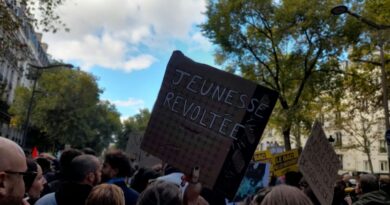
In France, The mobilizations of students from high schools and universities that began in September spread from the institutes to numerous cities. Lack of personnel and educational resources, The difficulties in accessing higher education and the increase in housing prices fueled the protests. Outrage is combined with rejection of the increase in fuel costs and the deterioration of public services. The return of the “Yellow Vests” and the demonstrations of different social sectors once again put the deep structural crisis on the scene, political and social of the Bloc of European imperialisms.
You may also interest you: “France in flames: youth rebellion against adjustment and repression. Let's coordinate the fights for the general strike!”
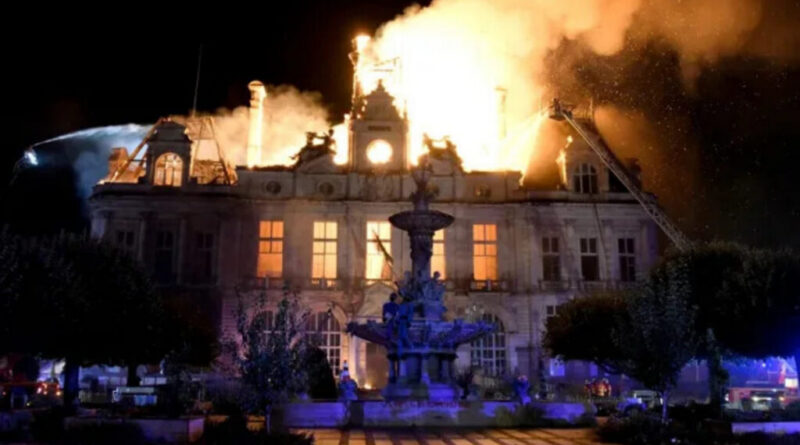
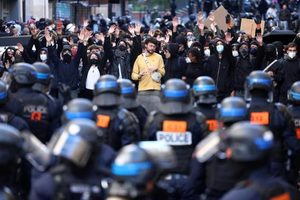
Clashes with the police, Mass arrests and state repression show the worsening of social polarization due to the lack of government responses.. At the same time they relocate the present need for self-organization and self-defense.
The events in France are qualitative. This is how it has been over time, on most occasions initiators or strong drivers of revolts in Europe and around the world.
In Spain, Maricarmen's eviction and subsequent death unleashed a wave of indignation. The fight for housing spread through different cities and had a highlight in the Puerta del Sol encampment., in Madrid. The movement questions prohibitive rents, real estate speculation and the impossibility of emancipation. After 14 years of looking the other way, UGT and CC.OO. were forced to call a general strike for the 11 of November, as demanded by the mobilizations and organizations for decent housing.
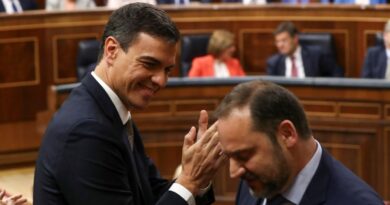
The crisis is so deep that the faltering government of Pedro Sánchez (PSOE), abandoned by some of its partners and in decline, called early elections for the 29 of November. The great task is to prevent the strike from becoming a maneuver to decompress social pressure and offer the people to "continue the fight" by voting for Sánchez as the "lesser evil" against the PP and Vox. Grassroots assemblies are needed, coordination of the demands and continuity of the strike through a plan of struggle with the demands of the workers and the people. In that way, It is essential to build a radical left alternative and set up a revolutionary pole for struggles and elections.
You may also interest you: “In the face of the fight for housing and 29-N: Let's stand up a radical left alternative."
Italy is also on the boil. The student protests, started in Turin and extended to Rome, Bologna and Naples, They demand accessible residences, more scholarships, free public transport, among other claims. In Milan, Turin and other cities, The demonstrations incorporated the rejection of the war, to the rise in energy prices and Meloni's policies. The CGIL, principal central Italian trade union, called a general strike for the 20 of November.
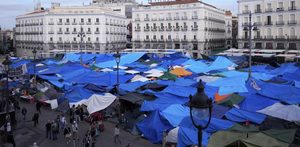
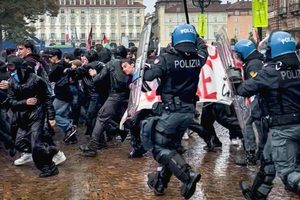
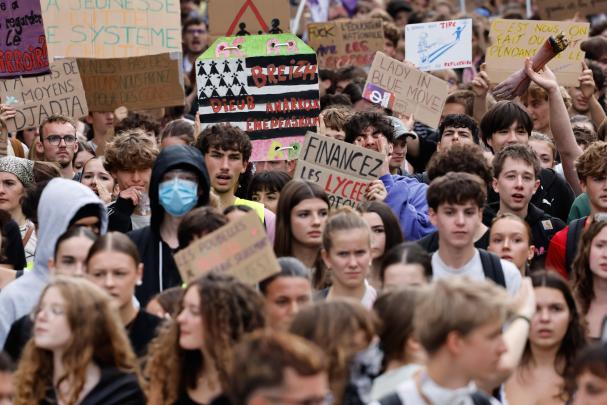
In Belgium, students from Wallonia and Brussels took to the streets against cuts in education, health and social benefits promoted by the Government. The measures threaten school resources, free meals and transportation aid, In addition to making studies more expensive. In Portugal, protests and camping in Lisbon and Porto demand limits on rents, suspend evictions and expand public housing, It is worth remembering that Portugal comes from a successful general strike that was fundamental to defeat the anti-worker labor package. In Germany, Thousands of young people reject the reinstatement of military service and warn about the consequences of militarization. Albania is also experiencing strong mobilizations against the lack of job prospects, educational cuts and the Government.
These are not isolated episodes. Although each country has its particularities, The protests express the same social crisis and a growing willingness to fight.
The youth, protagonist alongside the workers
Youth occupies a central place in this rise. High School and University Students, young workers and unemployed take to the streets facing unmet needs that darken their future.
Housing has become one of the main expressions of that reality. In Spain, Rents have risen far more than wages over the last decade. For thousands of young people, Emancipation means sharing rooms at abusive prices or staying in your family's home.. Job insecurity adds up, low wages, educational difficulties and fear of a future marked by instability.
But youth does not fight alone. Teachers, healthcare workers, unions, farmers and other sectors begin to converge with the student protests. This convergence is decisive: youth force can be multiplied by joining the mobilization capacity of the working class.
The demands also acquire political content. Governments are questioned, their budget priorities and the repression used to contain discontent. The fight is no longer limited to demanding partial improvements: begins to discuss who pays for the crisis and in whose service society functions.
A rebellion that was brewing
The current rise did not come from nowhere. It is part of a succession of crises, rebellions and mobilizations that during the last two years traveled to different parts of the world.
Palestinian resistance to the occupation and devastation of Gaza, together with international mobilizations against genocide and in solidarity with Palestine, showed the rejection of millions of people to imperialist barbarism. University protests and worker and popular actions against the war and the policy of US imperialism, headed by Trump, demonstrated that there is a broad willingness to confront the complicity of governments with the State of Israel.
Strikes also accumulated in Europe, protests against adjustments and mobilizations in defense of public services, salaries and pensions.
The root causes: a system that condemns the majority
The root of this process is in the structural crisis of capitalism and its manifestations in the European imperialist bloc.. Governments demand sacrifices from majorities while protecting corporate profits, financial speculation and the interests of large property owners.
Salaries lose purchasing power, food and energy prices rise, and housing becomes an inaccessible business. Unemployment and precariousness make youth autonomy difficult, as cuts deteriorate education, health and public services. The migrant population, Besides, supports discriminatory policies, labor exploitation and repressive measures that seek to divide those who share the same class interests.
Added to this are institutional abuse, the criminalization of protest and the lack of perspectives. Governments fail to solve the problems of the majority, but they reinforce their police apparatus and restrict the right to demonstrate when the mobilizations threaten to overwhelm them..
Rearmament for imperialist wars, austerity for the people
As the social emergency grows, European governments allocate more and more resources to rearmament and preparing imperialist wars. Militarization is presented as a security necessity, but its costs fall on the majority. Benefits are cut, Public services deteriorate and salary moderation is demanded, while military budgets increase and the arms industry strengthens.
Because, from the European parties of the International Socialist League (LIS) we strongly raise the slogans: «No to Fortress Europe. No to austerity for imperialist wars. For workers' governments and a Socialist Europe".
Polarization: the far right grows, but also the resistance
The crisis deepens political polarization. The extreme right capitalizes on part of the discontent with speeches against immigration, feminism and social rights. Try to confront native and migrant workers, divide the youth and present the most vulnerable sectors as responsible for problems caused by the system.
Nevertheless, Current mobilizations also express an opposite dynamic. Cuts are rejected in the streets, precariousness, militarization and repression. In different places, protesters explicitly question right-wing and far-right governments. The fight for housing, public services and youth rights can strengthen class solidarity and open a way out on the left.
It is necessary to build an independent alternative, capable of confronting the right and the extreme right without subordinating itself to the reformists who maintain capitalist privileges.
Let the working class burst in with all its force
The great challenge is for the working class to intervene with all its strength, unifying youth struggles with those of occupied workers, precarious, unemployed and migrants. The general strikes called in Spain for the 11 November and in Italy for the 20 They are opportunities to move in that direction and become support points for sustained mobilization., not in isolated actions or controlled from above.
We must demand that union leaders put all their organizational capacity at the service of the struggle.. You also need to overcome your limits, passivity and agreements that subordinate demands to the electoral needs of governments. Strikes must be prepared from the workplace, with assemblies, strike committees, coordination between sectors and democratic decisions.
Youth needs to meet the organized working class. The unity between both sectors can expand the demands, sustain the struggles and confront attempts at division and repression.
Immediate tasks and strategic challenges of the revolutionaries
For the revolutionary socialists, This scenario poses urgent tasks. It is necessary to promote every fight, promote unity of action and defend specific demands without losing sight of the need for a fundamental solution.
Unity to fight does not mean hiding political differences. Common experiences allow strategies to be debated, demonstrate what proposals serve to advance and build a new combative direction, democratic and independent. This includes building one's own political alternative.
The great challenge is to regroup the revolutionaries at the national and international level, on the path to building a strong socialist alternative, revolutionary and internationalist. In this regard, From the LIS we campaign with this perspective and encourage the exchange of opinions with organizations and colleagues of different expressions who consider it positive.. In search of a new political tradition that prioritizes agreements, a principled program and a democratic method that allows differences to be processed.
It is necessary to unite the immediate struggles with the strategic perspective of defeating capitalism and fighting for governments of the workers and popular sectors., on the road to a Socialist Europe.
You may also interest you: “III Congress of the LIS: Call for revolutionary regrouping”