Bulgaria: capitalism causes inequality and poverty
What are the historical and contemporary background of the Bulgarian rebellion reflected in the note “Bulgaria: crisis, mobilizations and resignation of the government?
Por Rubén Tzanoff and Oleg Vernyk
Tens of thousands of Bulgarians mobilized during December, with young people at the head, They staged a popular rebellion. It was a new chapter in the future of a country that, capitalist restoration involved, It went from being a satellite of the former USSR to being the second poorest in the imperialist bloc of the EU.
Bulgaria in the Eastern Bloc
In 1944, at the end of World War II, The Red Army entered Bulgaria and 1946 the constitutional monarchy of the Saxe-Coburg-Gotha dynasty was abolished. Simeon II was the last monarch before the People's Republic of Bulgaria was proclaimed under the power of the Bulgarian Communist Party.. The country became one of the most faithful and dependent allies of the former USSR within the military alliance of the Warsaw Pact and economic alliance of COMECON. (Council for Mutual Economic Assistance).
Block exit and transition
In Bulgaria, Todor Zhivkov had one of the longest and most authoritarian mandates within the Stalinist bloc (1954 – 1989) until he was removed after the fall of the Berlin Wall and then a relatively peaceful political transition towards capitalist restoration began..
In 1990, the country left the Warsaw Pact, distanced itself politically and economically from Russia, was renamed the Republic of Bulgaria, was admitted to NATO (2004) and in the European Union (2007) in conditions of poverty, as a peripheral nation of the main European powers, without being part of the euro zone (use the bulgarian lev) and with partial integration into the Schengen area.
In this way, European imperialism and the remains of the Stalinist bureaucracy consummated the process of capitalist restoration through which Bulgaria went from being a subject country and satellite of the USSR to being the second poorest country in the Bloc.. In the years 90, the economic crisis was deep, with hyperinflation, privatizations, increase in unemployment, poverty and external debt, with the “invaluable” intervention of the IMF and the World Bank imposing reactionary reforms and savage adjustments against the workers and the people.
Capitalism has not resolved popular needs
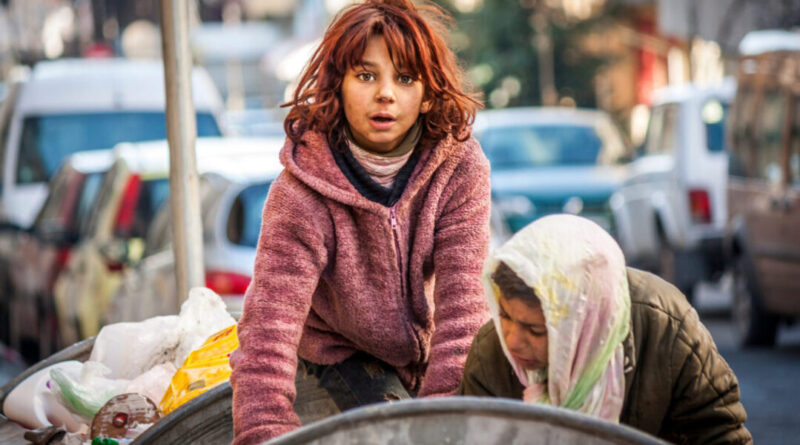
With the capitalist restoration, GDP per capita has risen, but Bulgaria remains the Member State with the lowest per capita income in the EU, standing approximately 34 % below the community average in GDP per capita (relative prices of 2024), and with levels of real consumption and well-being completely lagging behind, around the 30% of the population is at risk of poverty, There is great social inequality and the young population emigrates in search of better conditions. In summary, capitalist restoration has not and will not qualitatively change the standard of living of the workers and the people, Conversely, will continue to deteriorate with the continuity of the systemic crisis that began in 2008.
Furthermore, social and territorial challenges persist.: high rates of risk of poverty (around the 30 % of the population according to AROPE), strong emigration of active population, aging and marked regional disparities, all of which explains why, despite the accumulated relative growth, Bulgaria remains among the most disadvantaged countries in the community bloc.
with inequalities, fueron por el mismo camino en: Lithuania, Estonia and Latvia (2004), former USSR; Poland, Hungary, Smell, Slovakia, Slovenia (2004), former Eastern Bloc and, Romania and Bulgaria (2007). They all have an average GDP per capita below the EU average, Bulgaria standing out among the worst.
Closer background
Boyko Borisov was the leader of Bulgaria's Citizens for European Development party. (DEAR) since its foundation in 2006/2007, He was prime minister for more than a decade in several terms accumulated between 2009 Y 2021, year in which “his luck changed”.
Since July 2020, Bulgaria experienced months of protests against Borissov's government and the last straw were images taken in its official bedroom, anonymously leaked images that showed him sleeping with wads of banknotes 500 euros on the nightstand, gold bars and a gun next to the bed. The scandal led to the calling of elections, which the We continue the change coalition would win – Democratic Bulgaria (PP-DB), liderada por Kiril Petkov.
Since then, No government in the country has managed to be in power for more than a year. Since April 2021, Bulgarians have gone to the polls a total of seven times to elect their parliament (April 2021, julio 2021, November 2021, October 2022, April 2023, June 2024 and october 2024). There have been eight transitional governments; three brief coalitions that have governed (Petkov's government 2021-2022, the Denkov-Gabriel grand coalition 2023-2024 and Rosen Zhelyazkov's coalition in 2025); and numerous motions of censure: only in 2025 six motions have been presented. The last to fall was the Zhelyazkov Executive, which started in January of this same year.
Explosive exhaustion
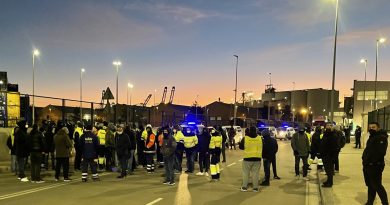
Decades of apathy and boredom - only the 39%- of unlimited corruption and poverty, have led to demonstrations during December, again with the emergence of youth, which in many uprisings has been called “generation Z”. This time, with tens of thousands of people in the streets since 1 from December, after the announcement of the budgets for 2026, at a time when the country is preparing to adopt the euro, that will enter as currency 1 to declare itself a provisional government and above all to prevent the advances of the protesters from the suburbs 2026 and forced the resignation of the government 11 from December. The draft aroused strong social opposition due to cuts in social spending, the increase in the tax burden on the self-employed and small businesses, and the lack of measures against inflation and corruption. They were the largest mobilizations in the last decade, more than 200.000 people throughout the country and 100.000 in Sofia, the capital of Bulgaria.
Last thoughts
It is confirmed for the umpteenth time that imperialist capitalism is a system of exploitation and oppression that will never solve any of the underlying problems of workers and people linked to democratic and social rights.. The EU is not the savior of the Eastern European countries but rather their oppressor since it incorporates some countries in the region only to extend the influence of Western imperialism in its dispute with Russian imperialism and plunder them in semi-colony conditions.. What is happening with Bulgaria and other Eastern countries absorbed by European imperialism is a warning of the fate they have planned for Ukraine., although for now, They do not even consider fully incorporating it.
- In June 2025 A massive Pride March with massive popular support challenged the repression of Viktor Orbán's far-right government. In August 2025 -since 2024- There were violent and repeated youth protests in Serbia and there are other examples. In a context of state persecution, censorship, institutional hatred and strong polarization with the extreme right, Protests for social and democratic rights are being repeated in Eastern countries, both community and non-community. They are indicative of the situation of instability and European crisis, inside and outside the Block, aggravated by the war in Ukraine, the friction with the US. and the continuity of the capitalist crisis from which the central countries do not escape and opens a question about what will happen in the future.
- The workers and people continue to fight without revolutionary leadership at the forefront, with which even great deeds end up being channeled through the mechanisms of bourgeois democracy or in more or less categorical defeats.. To break that vicious circle, it is necessary to build consistent left-wing parties at the national level and regroup revolutionaries at the international level, central task that you carry out daily, the International Socialist League and which received a strong boost in itsIII Congress. Workers need to govern, with workers democracy, without bosses or bureaucrats.