
Popular mobilization to immediately impose the amnesty!!
No trust in judges or government.
By Gérard Florenson
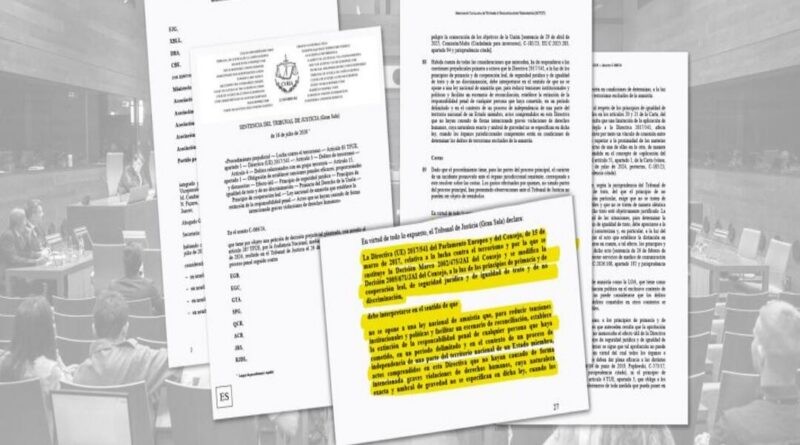
El TWENTY (Court of Justice of the European Union, based in Luxembourg) has issued a resolution that constitutes, definitely, a setback for the Spanish right and for the judges heir to Francoism, but it has no immediate consequences.
The road to a true amnesty remains long. Long and rugged: We would have to wait for the Constitutional Court to take this decision into consideration and for the Supreme Court to agree to renounce the cases against Puigdemont and all the people persecuted for alleged crimes related to the “process” independence. Nevertheless, It is already evident that the different Spanish jurisdictions are in no hurry and that new resources may appear aimed at limiting the effects of the amnesty law as much as possible., which could prolong the process for another two years or more.
The latest maneuver consists of accusing the independence leaders of personal enrichment, since the crime of embezzlement - based on the financing by different administrations of expenses related to the Referendum - is not enough to condemn them. The argument, grotesque, is that this institutional financing allowed them not to have to pay those expenses out of their own pocket. It is absurd reasoning and probably doomed to fail once again., but maintaining this endless judicial dance saves time, perhaps until the arrival of a PP and Vox government.
Thus, triumphalist reactions are out of place. The law came into force in June 2024 and its application has been very limited, except for the police officers responsible for the most brutal attacks against the population, that almost all have been amnestied. Puigdemont and the other exiles are still unable to return to Catalonia because the arrest warrants against them remain in force.. The disqualifications of Oriol Junqueras also remain in force, Jordi Turull and other condemned leaders who, although they left prison, they cannot stand for election. Likewise, judicial proceedings continue – under the delirious accusation of terrorism – against CDR militants..
JUNTS and ERC preferred the judicial dead end to mobilization
TOGETHER, ERC and even some more radical sectors are now raising their tone and demanding the total and immediate application of the amnesty. But a small problem arises: before whom and by what means? Because it is difficult to think that simple moral pressure will be enough to convince the Supreme Court. So, to whom to address the demand? to the government, threatening to withdraw support for his budgets if he does not press in the right direction? Even assuming that was possible, Sánchez would have to renounce the myth of “respect for justice”; that is to say, respect for judicial institutions inherited from Franco's regime. It is true that the PSOE and its Catalan appendix have changed their discourse and that Salvador Illa also now demands the immediate application of the amnesty. But to understand the reasons for this change it is necessary to remember previous events.
October of 2017. The PSOE joined the PP and Ciudadanos to approve the application of the article 155 promoted by Rajoy: a real blow against democracy that dismissed the legitimately elected president of the Generalitat and dissolved the Catalan Parliament. Next came the accusations and imprisonment of those who did not opt for exile., all this not only with the blessing of the monarch, but with his active intervention to crush the “process”. The P.S.C., the party of “socialists” Catalan, did exactly the same. Your leader, Miquel Iceta, He even demonstrated in the street alongside the right against the right to decide.
Puigdemont offers an explanation: Sánchez governs in a minority in the Cortes and needs the votes of the Catalan parties, so you are forced to make concessions to them. This interpretation has an advantage for JUNTS: allows you to present your own policy as “radical” against the alleged collaborationism of ERC. We have shown in several articles that the JUNTS opposition has served above all the employers and large landowners., preventing even very moderate reforms from affecting their profits, the fiscal issue being its main battlehorse.
Considering that Sánchez's support for the amnesty is due to the fact that his government has no future without parliamentary allies, Puigdemont is partly right, but only part. What it hides is that this amnesty is part of the political normalization process, of the attempt to relegate the “Catalan question” to the background and to put an end to the independence struggle by replacing it with negotiated autonomy. He hides it because recognizing it would mean admitting the responsibilities of JUNTS and ERC.
JUNTS and ERC buried the popular mobilizations and abandoned the independence struggle
The leaders of both parties let the powerful mobilizations that followed Rajoy's coup die out., by leaving them without any political perspective. From that moment on, they transferred their strategy to the judicial field., also waiting, in vain, the help of the European Union. When the PSOE came to power, opted for the route of pardons: individual pardon measures that allowed several pro-independence leaders to leave prison, but without the alleged crimes they were accused of disappearing, fundamental difference with a true amnesty.
This concession from the government should have opened the way to the fight to achieve a true amnesty, to the abandonment of all judicial cases, to the return of the exiles and the full restoration of the civil and political rights of the condemned. This fight could have brought together a much broader sector than that formed solely by the independentists., especially to the reformist left that had opposed the article 155 and to repression. It was possible to put a million people on the streets, and even more, around that claim, with demonstrations supported by strikes and blockades.
By rejecting that path, JUNTS and ERC allowed the PSOE to recover the initiative with the aim of turning the page and “restore harmony”. Nine years after the referendum and the coup of force of the Spanish State, The government considered that it could grant an amnesty without risks, an amnesty that would not be extracted through popular mobilization. In 1884, in France, the republican bourgeoisie, once his power was consolidated, He also allowed himself the luxury of amnesty to the community members.
Back to normal: What better for the Catalan employers?? Upset at the time by the initiatives “adventure” de Puigdemont, unhesitatingly obeyed the request of Rajoy and the king to move its corporate headquarters outside of Catalonia as a punishment measure. Since then, many of these companies have been progressively returning and hope that an already moderate JUNTS will defend their interests: reinforced autonomy, tax advantages and less “restrictions” social and environmental. It's not strange, so, that an amnesty and the return of Puigdemont hardly arouse concern among Catalan capitalists. By defending this basic democratic demand, of course we will not give up fighting the reactionary policy of JUNTS.
But a true amnesty will not come by itself: we will have to conquer it
He faces blockages from the Spanish right and the judges who act at his service. Although the Catalan capitalists perceive the advantages of this situation, the tone is very different in other sectors, that feed anti-Catalan prejudices and denounce Sánchez's concessions to the separatists. To achieve a true amnesty it will be necessary to do precisely what the leaders have refused to do “Catalanists”: mobilize in the streets and not passively wait for the next judicial decisions.
It will be necessary to mobilize in Catalonia and ensure that this fight is assumed by the vast majority of the population., without distinction of origin or beliefs. That means defending a much broader amnesty than the one approved so far.: an amnesty for all those called “social crimes”, for all unionists and activists persecuted by Capital's justice and for workers sanctioned or even fired for resisting exploitation. And that same fight must be promoted throughout the peninsula, because the defense of our democratic and social rights cannot be divided according to nationality.