Ceuta: People's lives are worth more than the walls of the city “fortress europe”
While thousands of desperate people tried to reach Ceuta, The Mediterranean and the Strait once again became a mass grave. So far they have recovered. 75 corpses, but everything indicates that there will be even more. Faced with the human drama, the response of European governments is more militarization, expulsions and xenophobia. The only way out is to confront the reactionary policies of the European Union and fight for a response based on solidarity and the rights of migrants..
By Ruben Tzanoff
A border turned into a cemetery
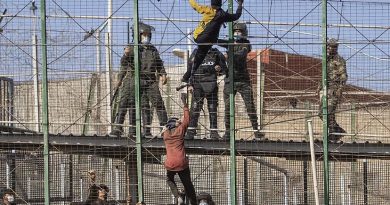
The migration crisis unleashed in Ceuta leaves a partial balance of 75 bodies recovered by rescue teams. It is estimated that they were 50.000 the people who crossed or attempted to cross the border from Morocco by land or sea in a few hours and the sea once again exhibited the human cost of the border policies of the European imperialist bloc. Rescue teams recovered numerous bodies on the beaches and waters near Ceuta, while the search for missing persons continued. Many families still do not know the fate of their loved ones and it is feared that the real number of victims is higher than officially confirmed..
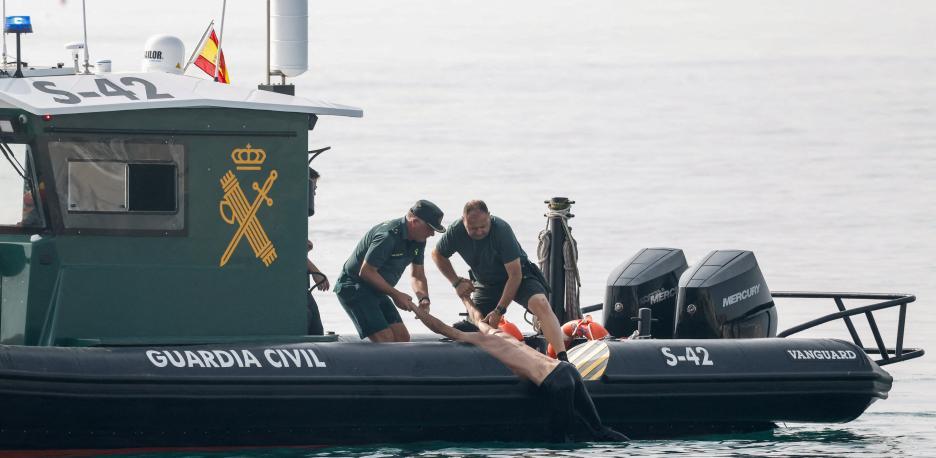
Behind every recovered body there is a story of poverty, wars, chases, climate crises and imperialist looting. They did not die from an unavoidable accident. They died because the European Union has turned its external borders into a deterrence system where the high risk of death is part of the real functioning of migration policy.. It should be noted that according to data from the Ministry of the Interior 48.000 people were immediately returned to Morocco. The figures are five times higher than those recorded during the May crisis. 2021 and make this episode the largest mass entry of migrants recorded so far in the autonomous city.
Solidarity against hate
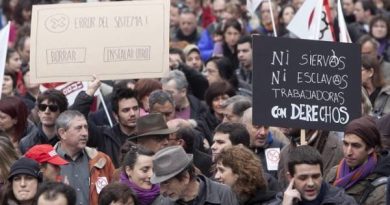
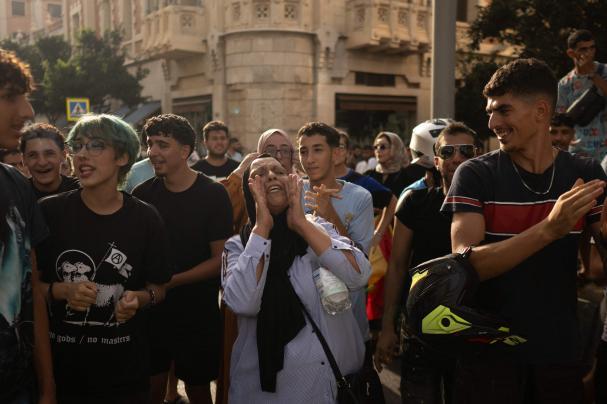
The tragedy has also once again revealed a strong political and social polarization. In Ceuta the leader of Se Acabó La Fiesta (OINTMENT), Alvise Pérez, accompanied by the ultra agitator Vito Quiles, and militants of the neo-Nazi group Núcleo Nacional called xenophobic rallies, seeking to politically capitalize on the situation. Nevertheless, They met with a firm response from numerous neighbors who defended coexistence and rejected the instrumentalization of the suffering of migrants.. with which they forced the National Police to evacuate the ultra leaders and militants to the port. The mobilization showed that in the face of hatred and provocation there is a supportive and popular response that vindicates the unity of the working class and the defense of a Ceuta without racism or fascism..
Expressions of solidarity from neighbors appeared in different parts of the Spanish State, volunteers and social organizations that provided humanitarian aid and denounced the loss of human life. But at the same time, expressions of hate fueled by the extreme right grew., as already seriously happened in Torre Pacheco. Fascist groups took advantage of the crisis to organize harassment and persecution actions against migrants, while xenophobic campaigns proliferated that seek to turn those fleeing hunger and war into internal enemies and responsible for the shortcomings that the capitalist system actually generates.. The fight against racism cannot be reduced to a moral condemnation. It is a political fight against those who use fear to divide the working class and strengthen reactionary projects..
The double face of Pedro Sánchez
The Spanish president tries to present himself as a defender of European values against the continental right. He criticized the lack of solidarity of several European governments and denounced the selfishness of those who attacked Spain during the crisis.. Nevertheless, that speech can barely disguise an obvious reality. The same government that demands European solidarity boasts of having recovered border control in less than 48 hours and having repatriated the vast majority of people who managed to enter the country.
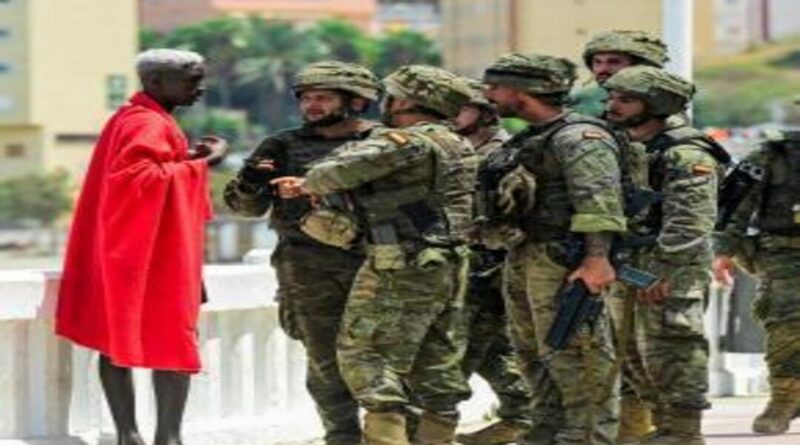
Spain continues to play the role of guardian of the southern border of the European Union. Maintains agreements with Morocco to contain migration, maintains increasingly harsh police and military devices and applies return policies that deny, in practice, the right of thousands of people to request protection. There is no contradiction between the Government's humanitarian discourse and the repression on the border. Both are part of the same policy: manage migration without questioning the European border regime.
The EU and its increasingly inhumane governments
Far from promoting a solidarity distribution of refugees and migrants among all member countries, Twenty-two European Union governments responded by demanding even more tightening. The letter promoted by these governments calls for strengthening Frontex, accelerate expulsions, combat irregular immigration, strengthen cooperation with Morocco and eliminate what they consider “attraction factors”. Instead of debating reception systems or integration policies, The priority was to secure the borders and accelerate deportations. The political message is unequivocal: for the main European powers, the problem is not the people who die trying to get there, but some manage to survive.
Melons: anti-immigrant spearhead
The Italian Prime Minister, Giorgia Meloni, once again stood at the forefront of the reactionary offensive. His government promoted the letter signed by twenty-two countries demanding a much tougher response to migration and decided to reestablish controls on travelers from Spain., even straining the functioning of the Schengen area. Meloni has been one of the main promoters of the externalization of European borders: transfer immigration control to third countries, finance governments to contain migrants and make it difficult to access the right to asylum before even setting foot on European territory. Its policy aims to consolidate an increasingly militarized Europe, where the protection of human rights is subordinated to repressive control.
The ultra-reactionary regime of Mohamed VI
Although in every migration crisis there are accusations crossed between the Kingdom of Morocco and Spain, The governments of both countries are responsible. The monarchical regime influences the migratory flow in an inhuman way and exclusively with attention to the pressures it wants to exert on Spain at all times.. They are partners with historical and permanent nuances, about Ceuta and Melilla; energy interests following Spain's rapprochement with Algeria - Morocco's great enemy in the Maghreb – on the occasion of the war in Ukraine. further, conjuncturally, Sánchez appears critical of Trump while Mohamed VI has received the support of US imperialism and Zionism to deny the self-determination of Western Sahara, economic and military advantages. There are many elements that make disputes between “neighbors” and the inter-imperialist dispute. Either way, because the closest thing to the truth may be known over time, No government movement justifies repression and denial of rights for immigrants fleeing hunger, misery and error. Neither side has people and their rights as the fundamental values to defend..
A permanent and increasing tragedy
The response to the Ceuta episodes is part of a systematic policy that has turned European borders into one of the largest mass graves on the planet.. According to the International Organization for Migration (OIM), during 2025 died or disappeared 2.108 people in the Mediterranean and 1.047 on the Atlantic route to the Canary Islands, that is to say, 3.155 victims on two of the main maritime access routes to Europe. The Mediterranean concentrates the voyages to Spain, Italy, Malta and Greece, while the Atlantic route has the Canary archipelago as its destination. Added to these figures are more than 1.300 people who died trying to reach the Spanish coasts in the first months of 2026, which already anticipated one of the deadliest years of the last decade even before Ceuta.
If those of Ceuta are added to these figures, the balance between January 1, 2025 and beginning of August 2026 greatly exceeds the 4.500 people killed or missing on the main maritime access routes to Western Europe. Within that scenario, Spanish routes—especially the Atlantic route to the Canary Islands, the Strait of Gibraltar, the Alboran Sea and the approaches to Ceuta and Melilla—continue to be some of the most lethal. The combination of increasingly militarized borders, the absence of legal and safe avenues to request asylum, the externalization of immigration control to Morocco and other countries and the action of networks that traffic in people pushes thousands of men, women and children on increasingly longer and more dangerous journeys.
What we are experiencing is not a temporary crisis, but the consequence of a migration policy that turns the risk of dying into a permanent element of European border control. This shows that the crisis of imperialist capitalism is structural and systemic.: economic, social, politics, ecological, humanitarian…and exposes, just like the genocide and destruction in Palestine, the barbaric destiny to which the dominant system leads.
Taller and solid walls
What happened in Ceuta represents a new step in the construction of “Fortress Europe”: more walls, more surveillance, more agreements with repressive governments, more criminalization of those who migrate and more normalization of institutional racism. The border stops being an administrative space and becomes a permanent instrument of social selection: free movement for capital, goods and investments; obstacles, violence and death for those escaping misery.
Urgent humanitarian measures
In the face of this criminal policy it is necessary to demand immediate measures: the search for all missing persons and identification of victims; the suspension of returns and effective guarantee of the right to asylum; immediate reception with accommodation, healthcare, food and protection for all migrants; the solidarity distribution between the different European countries on the basis of human rights and not repressive quotas; the recognition of full democratic rights, labor and social for those who live and work in Europe, regardless of its administrative situation.
Hate must be defeated
The response must also be political. It is necessary to confront both the repressive policies of the Sánchez Government, the xenophobic offensive of the PP and Vox and the reactionary agenda promoted by the majority of the governments of the European Union that use each tragedy to sow hatred against migrants. In the face of racist attacks, unitary mobilizations are needed, popular organization, solidarity networks and democratic self-defense mechanisms that prevent the actions of fascist groups and protect those who are persecuted for their origin.
A world without borders for people
Capitalism globalizes the movement of money, multinationals and merchandise, but it builds walls against those who flee exploitation, the wars and hunger that that same system produces. As long as this order exists based on the inter-imperialist dispute, borders will continue to be instruments of exclusion and death. The fight for the rights of migrants is part of the same international fight against the extreme right., racism, imperialism and capitalism. Facing fortress Europe, we raise the perspective of a world where no person is illegal, with freedom of movement, equal rights and a socialist system of society serving human needs and not capital profits.
You may also interest you:https: “In Ceuta, again the disastrous “Fortress Europe” in action”